Language
To scientifically validate the quality of 6A Grade Mulberry Silk, Docsun Silk Lab integrates Scanning Electron Microscopy (SEM) and Digital Optical Microscopy visualization. This report examines the fiber's structural morphology, optical properties (luster), tribological performance, and biological safety, referencing established biomedical studies.
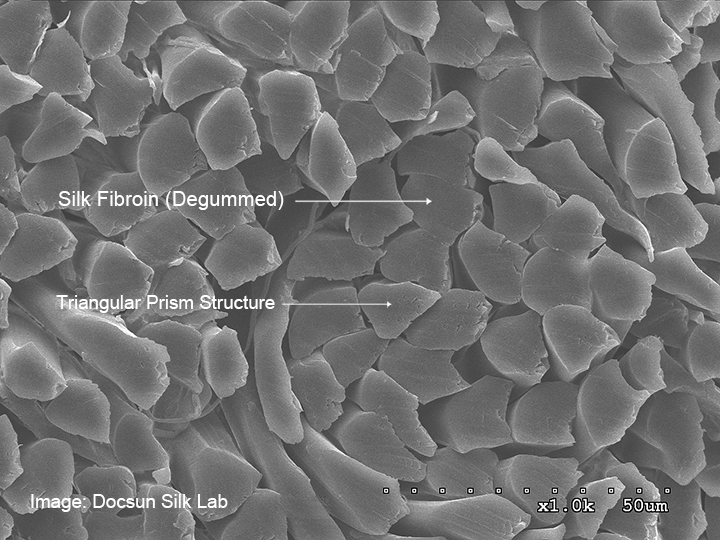
Figure 1: SEM cross-section of Docsun 6A Mulberry Silk showing the Rounded Triangular Prism Structure. (Image: Docsun Silk Lab)
*See Section 4 for GTTC-certified originals
Optical Refraction: Unlike round synthetic fibers, the triangular structure of silk acts as a natural prism, refracting light to produce a pearlescent luster.
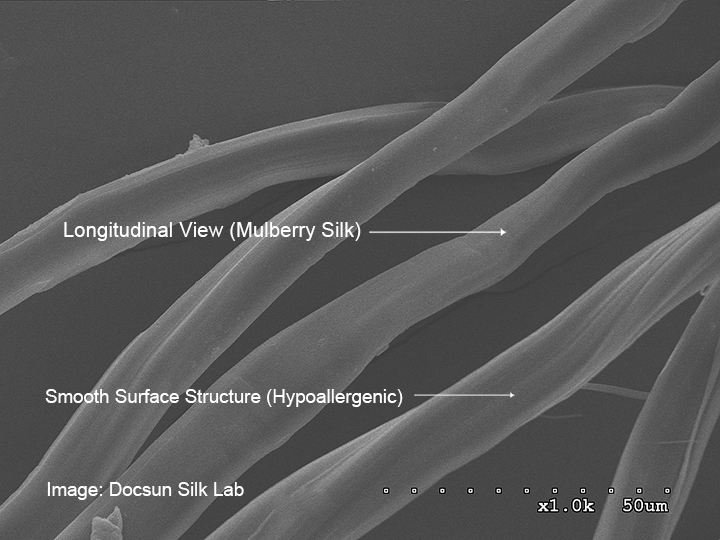
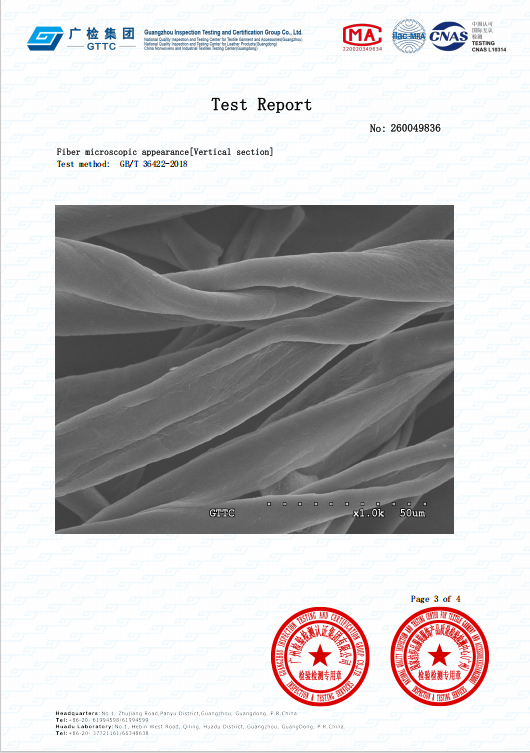
Figure 2: Longitudinal SEM view confirming the smooth, scale-free surface. (Image: Docsun Silk Lab)
*See Section 4 for GTTC-certified originals
Surface Topography: The longitudinal analysis confirms a friction-free surface, lacking the scales of wool or convolutions of cotton.
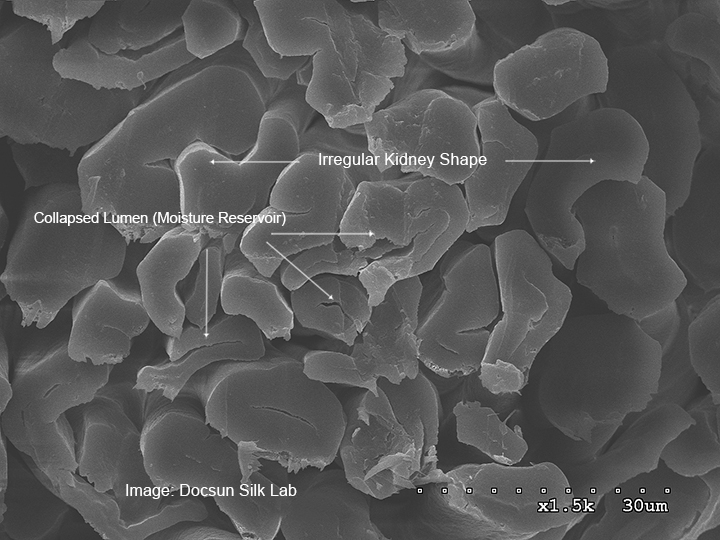
Figure 3: Cotton's Collapsed Lumen (Moisture Reservoir).
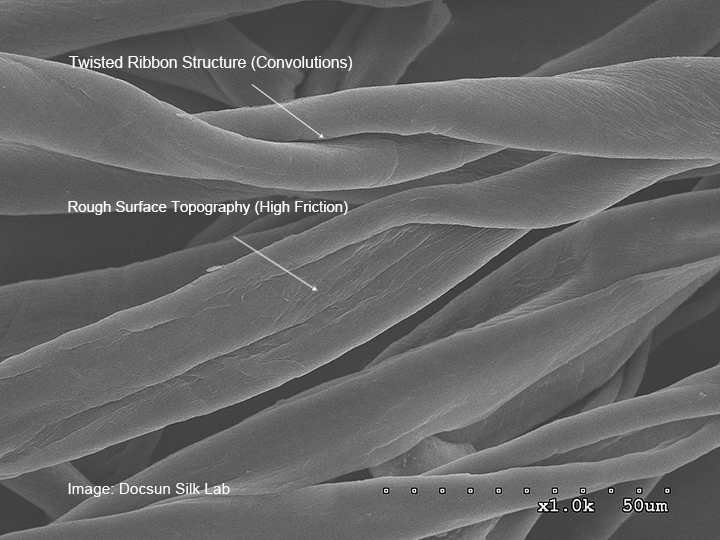
Figure 4: Cotton's Twisted Ribbon Structure.
Analysis: Cotton fibers feature a hollow "lumen" and twisted convolutions. This increases hygroscopicity (absorbing skin oils) and surface friction compared to the solid, smooth profile of silk.
The microstructural claims and comparative analyses presented above are not merely theoretical. They are validated by physical fiber samples submitted to and independently tested by Guangzhou Inspection Testing and Certification Group Co., Ltd. (GTTC)—a CNAS-accredited national testing authority with ilac-MRA global mutual recognition.
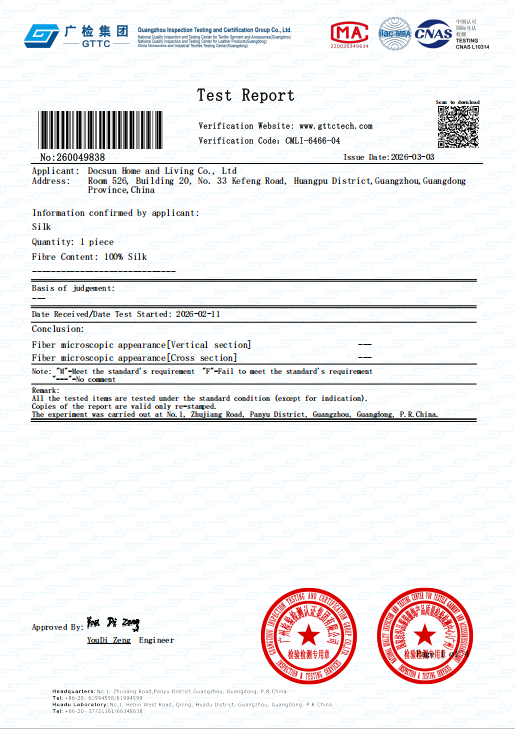
Report Cover: Issued 2026-03-03.
Applicant: Docsun Home and Living Co., Ltd.
Test Standard: GB/T 36422-2018. | Accreditation: CNAS L10314.
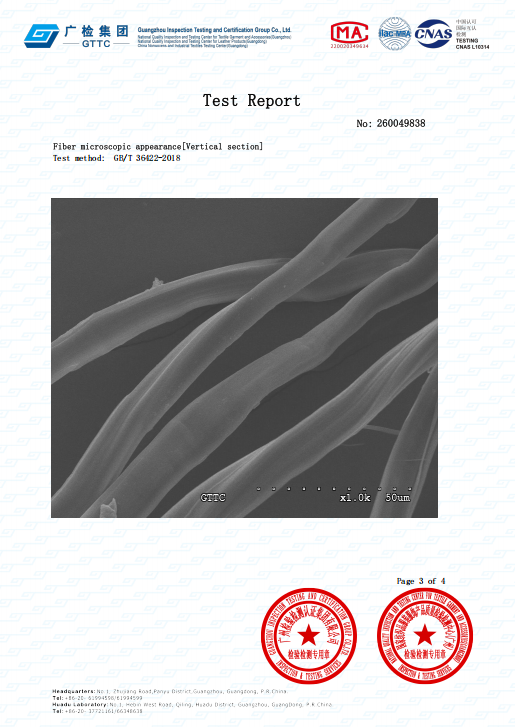
Longitudinal Section (x1.0k / 50μm): Smooth, scale-free surface confirmed. This structural integrity validates its ultra-low friction profile, explaining why silk prevents hair frizz and skin drag.
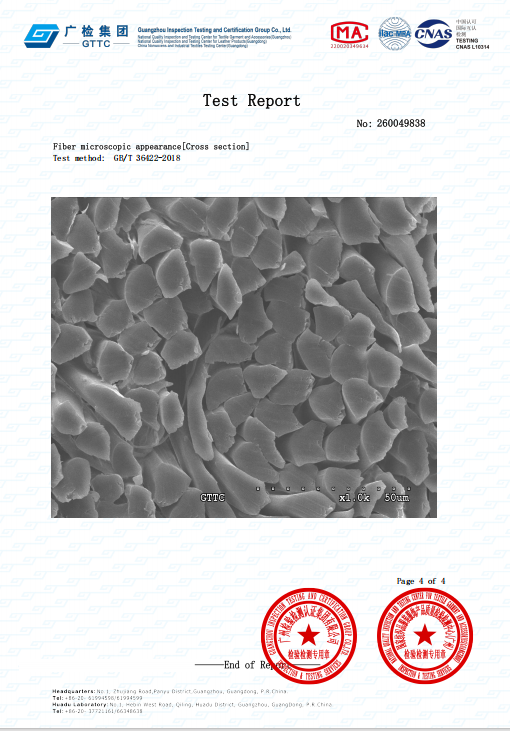
Cross Section (x1.0k / 50μm): Rounded triangular prism geometry confirmed. This is the exact structural basis for 6A Grade silk's natural pearlescent luster and multi-dimensional light refraction.
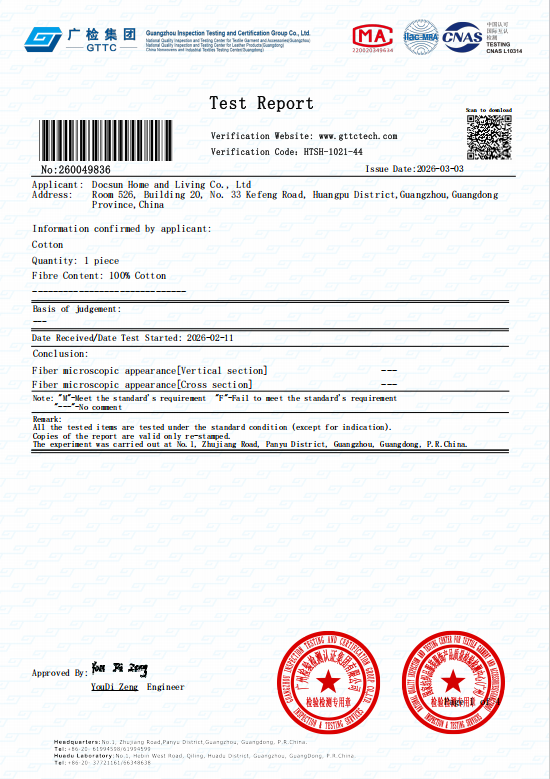
Report Cover: Issued 2026-03-03.
Applicant: Docsun Home and Living Co., Ltd.
Test Standard: GB/T 36422-2018. | Accreditation: CNAS L10314.
Longitudinal Section (x1.0k / 50μm): Twisted ribbon structure with natural surface convolutions. Visually demonstrates a significantly higher friction profile compared to silk.
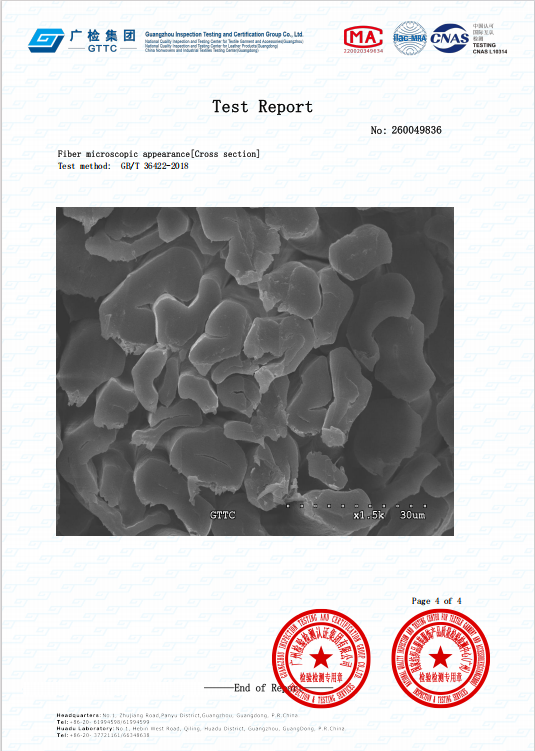
Cross Section (x1.5k / 30μm): Kidney-shaped, collapsed lumen structure confirmed. This irregular morphology sharply contrasts with silk's uniform geometry, explaining cotton's matte finish and abrasive tendency.
Test results are valid for the submitted samples per GTTC standard terms. Full reports are available to our B2B partners upon request.
Authenticity Verification: Silk Report Code: CMLI-6466-04 | Cotton Report Code: HTSH-1021-44
Verify at official portal: www.gttctech.com
While SEM analysis reveals micro-structure, 300x Digital Microscopy visualizes the optical behavior and weave density that affect daily usage. The following images compare natural Mulberry Silk against synthetic Polyester (Satin).

Figure 5: Mulberry Silk (300x).
Note the Diffuse Reflection (soft glow) and natural fibrous cohesion.
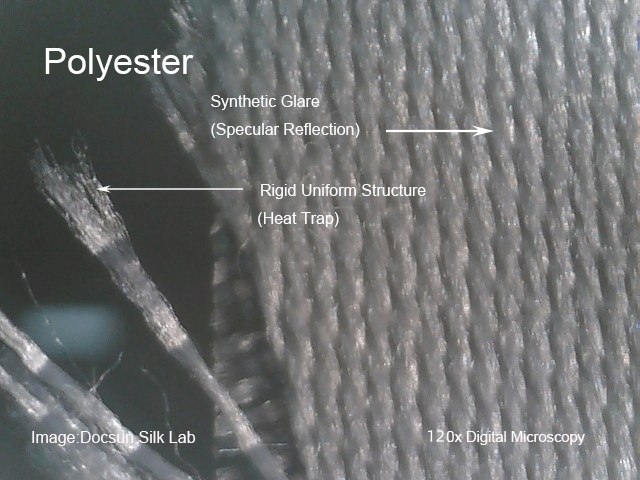
Figure 6: Polyester / Synthetic (120x).
Note the Specular Reflection (harsh plastic glare) and rigid uniformity.
Optical & Thermal Analysis:
Luster Quality: Silk's triangular structure scatters light (Diffuse Reflection), creating a premium pearlescent glow. Polyester's smooth, round surface bounces light directly (Specular Reflection).
Breathability: The natural irregularities of silk fibers create a "Nano-Capillary System" for air circulation. In contrast, the mechanical uniformity of polyester creates a dense, non-breathable barrier.
The tactile smoothness of silk is quantified by the Coefficient of Friction (CoF) using tribometers and AFM (Atomic Force Microscopy).
Nano-Scale Smoothness: According to the 2024 review in Bioengineering, regenerated silk fibroin films exhibit a surface roughness (Ra) of < 10 nm. This physical flatness fundamentally reduces sliding resistance[2].
Hydration Lubrication: Friction is not static. Under hydrated conditions (mimicking skin contact), silk fibroin creates a "water lubrication layer," reducing the CoF to as low as 0.02 - 0.10, approaching the lubrication level of human cartilage[1].
| Test Subject | Friction Coefficient (CoF) Range | Performance Benchmark |
|---|---|---|
| SF Film vs Glass (Dry) | 0.25 - 0.40 | Moderate (Protective Coating) |
| SF Film vs Glass (Hydrated) | 0.02 - 0.10 (Ultra-Low) | Mimics Human Cartilage Lubrication |
| SF Suture vs Tissue | 30% - 50% Lower than Cotton | Minimizes tissue abrasion |
| Nanofiber Surface Roughness (Ra) | < 10 nm | Atomically Smooth Interface |
Synthetic materials like polyester are notoriously prone to static electricity due to their hydrophobic nature (<0.4% moisture regain). In contrast, natural fibers like cotton and silk exhibit excellent static-dissipative properties, albeit through different mechanisms.
According to Jain et al. (2023) and Hutton et al. (1949), silk fibroin's amorphous regions contain high-density polar amino acids (like Serine and Threonine) and nano-pores that attract water molecules via strong hydrogen bonds[3][4]. This intrinsic hydration (maintaining an optimal ~11% regain) creates conductive pathways, allowing static charge to leak away naturally rather than accumulating to cause hair frizz.
| Material | Moisture Regain (%) |
Electrostatic Potential (Daily Contact / High Friction)* |
Key Factors & Characteristics |
|---|---|---|---|
| Mulberry Silk (Fibroin) | ~ 11% (Range 10-30%) |
Moderate 100-200 mV / ~1-2 kV |
High density of hydrophilic groups and nano-pores facilitate moisture absorption. Hydrophilicity aids in charge dissipation, maintaining a balanced microclimate. |
| Cotton | ~ 8.5% |
Lowest 55-60 mV / <1.5 kV |
Abundant hydroxyl groups provide strong hydrophilicity. Effectively absorbs ambient moisture to dissipate charge, resulting in the lowest static accumulation. |
| Polyester (Synthetic) | ~ 0.4% |
Highest 240-270 mV / >3.6 kV |
Lacks hydrophilic groups. Extremely low moisture absorption prevents charge dissipation, resulting in maximum static accumulation and tissue cling. |
* Note: Low-pressure tests (mV level) simulate daily light friction (e.g., fabric-to-skin contact); High-intensity tests (kV level) simulate laboratory rotary friction. Daily wear experiences correlate more closely with mV-level data[6].
Scientific consensus confirms that the immunogenicity (allergic potential) of raw silk is primarily confined to the Sericin coat. Once degummed, the remaining Silk Fibroin (SF) is a biologically inert material with a proven clinical safety record.
FDA-Approved Class:
Silk fibroin(SF) is not just a textile; it is an FDA-approved biomaterial used in surgical sutures and tissue scaffolds (e.g., SilkVoice) for decades. Its long-term clinical use validates its safety profile comparable to medical-grade titanium[2].
Low Inflammatory Response (TNF-α / IL-6):
Comparative studies show that purified SF induces negligible release of inflammatory cytokines. Levels of TNF-α and IL-6 in SF-exposed groups are statistically indistinguishable from negative controls, whereas sericin-containing samples trigger a 5-fold increase[2].
High Cell Viability (>90%):
In vitro MTT assays on human cells (e.g., HEK-293) demonstrate a cell viability rate of 90%–98% on silk fibroin(SF) substrates, confirming zero cytotoxicity.
Active Repair Mechanism (M2 Polarization): Beyond being "safe," Docsun's silk fibroin (SF) actively promotes skin health. According to De Giorgio et al. (2024), SF scaffolds can modulate the immune microenvironment by guiding macrophages toward the M2 phenotype (anti-inflammatory/repair state), rather than the M1 phenotype (pro-inflammatory).
Metabolic Safety: The fiber undergoes enzymatic degradation (via proteases) into natural amino acids, which are reabsorbed by the skin or metabolized, avoiding the acidic toxicity associated with synthetic polymers like PLA.
Docsun Silk Lab closely monitors the "Second Life" of silk fibroin (SF). Beyond textiles, our raw material is currently being researched as a foundational scaffold for the next generation of medical and electronic devices.
According to Li et al. (2022), silk scaffolds possess exceptional mechanical rigidity (due to β-sheet crystals) necessary for bone support. They create an bioactive microenvironment that promotes the differentiation of Bone Marrow Stromal Cells (BMSCs), actively accelerating bone regeneration[7].
In Organic Bio-Electronics, SF is valued for its dielectric stability and optical transparency. Researchers are developing "Transient Sensors"—implantable devices that dissolve harmlessly in the body after their task is complete[2][3].
The knee meniscus requires a material that is both tough and frictionless. Warnecke et al. (2017) demonstrated that SF scaffolds, when lubricated by biological fluids, exhibit a friction coefficient comparable to native cartilage[1].
Jia et al. (2019) demonstrated that the high density of hydrophilic groups in silk allows it to act as a self-balanced "fiber muscle." This means silk fibers can dynamically twist and untwist based on environmental humidity, opening avenues for advanced smart textiles that automatically regulate micro-climates[5].
Warnecke, D., et al. "Friction properties of a new silk fibroin scaffold for meniscal replacement." Tribology International 107 (2017).
De Giorgio, G., et al. "Silk Fibroin Materials: Biomedical Applications and Perspectives." Bioengineering 11.2 (2024).
Jain, S., et al. "Silk and its composites for humidity and gas sensing applications." Frontiers in Chemistry 11 (2023).
Hutton, E.A., et al. "The Moisture Regain of Silk: Adsorption and Desorption of Water by Silk at 25°C." Textile Research Journal (1949).
Jia, et al. "Moisture Sensitive Smart Yarns and Textiles from Self‐Balanced Silk Fiber Muscles." Advanced Functional Materials (2019).
"Electrostatic Properties of Clothing Fabrics Suitable for Different End-Uses." ResearchGate (2020).
Li, M., et al. "A Comprehensive Review on Silk Fibroin as a Persuasive Biomaterial for Bone Tissue Engineering." Int. J. Mol. Sci. 23 (2022).
We apply these biomedical-grade standards to home textiles. Experience the Grade 6A silk verified by our research.
Explore Products Engineered with 6A Silk