Language
Even when fabrics share the exact same "polyester satin" label, their market prices can vary by 3 to 5 times. Why does this significant pricing gap exist? As a fashion brand or buyer, how can you ensure you aren't paying a premium for low-end craftsmanship? The following is a comprehensive visual and craftsmanship comparison report conducted by Docsun Silk Lab, utilizing naked-eye observations and 180x digital microscope analysis under identical lighting conditions.
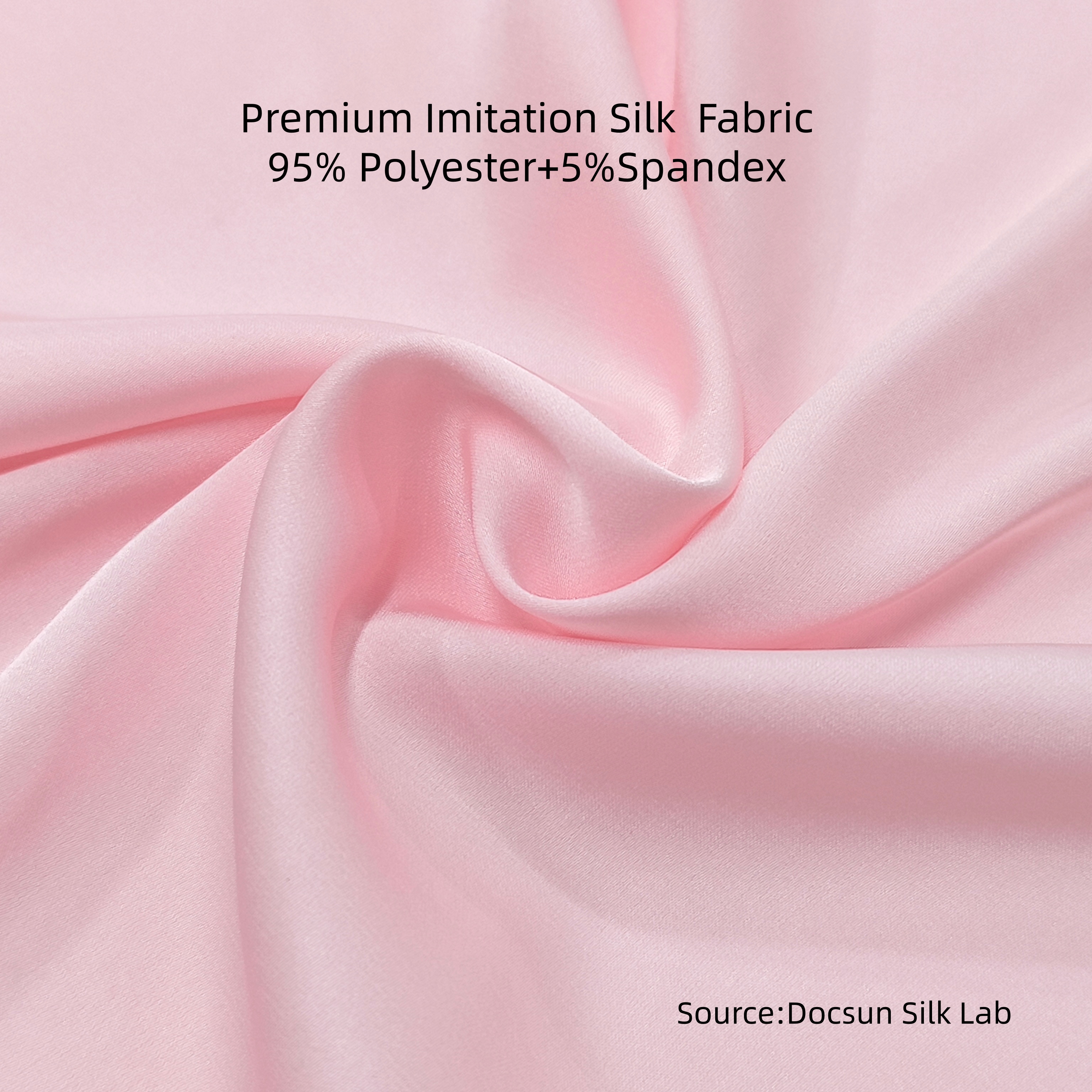
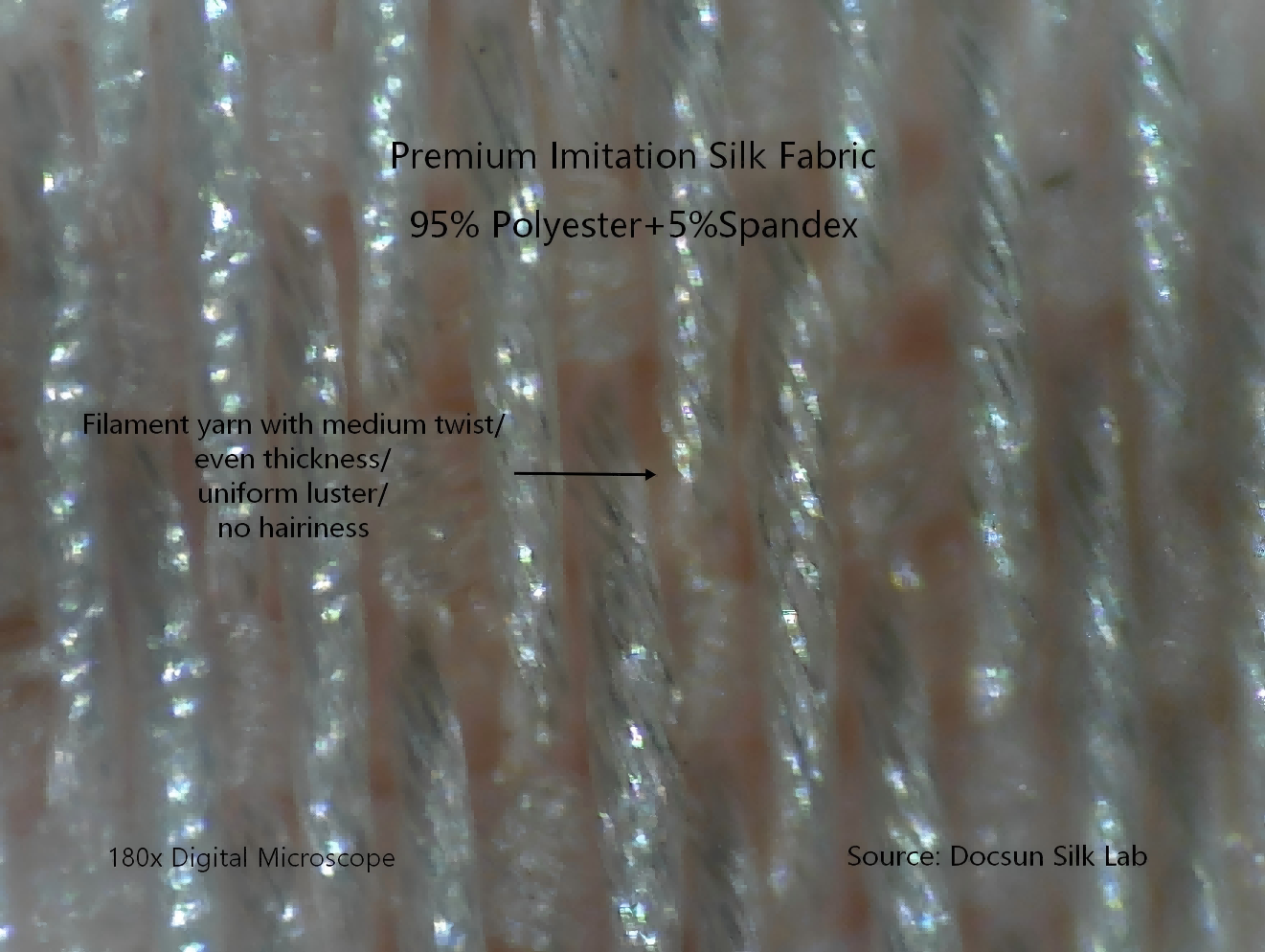
Crafted from polyester filament yarns utilizing a medium-twist process. Under the microscope, the structural arrangement is exceptionally neat, reflecting light uniformly with zero fluff or hairiness. This tight structure makes it highly resistant to pilling and snagging.
The addition of 5% spandex provides a crucial slight stretch. This not only significantly improves wrinkle resistance and ensures garment seams don't tear under tension, but it also delivers a buttery-soft skin feel. The fabric presents a gentle, luxurious luster closely resembling natural mulberry silk, accompanied by an outstanding drape.
High-end sleepwear alternatives to silk, luxury bedding (e.g., silk-like pillowcases), haute couture, and premium slip dresses.
Please see the actual fabric shooting video below:
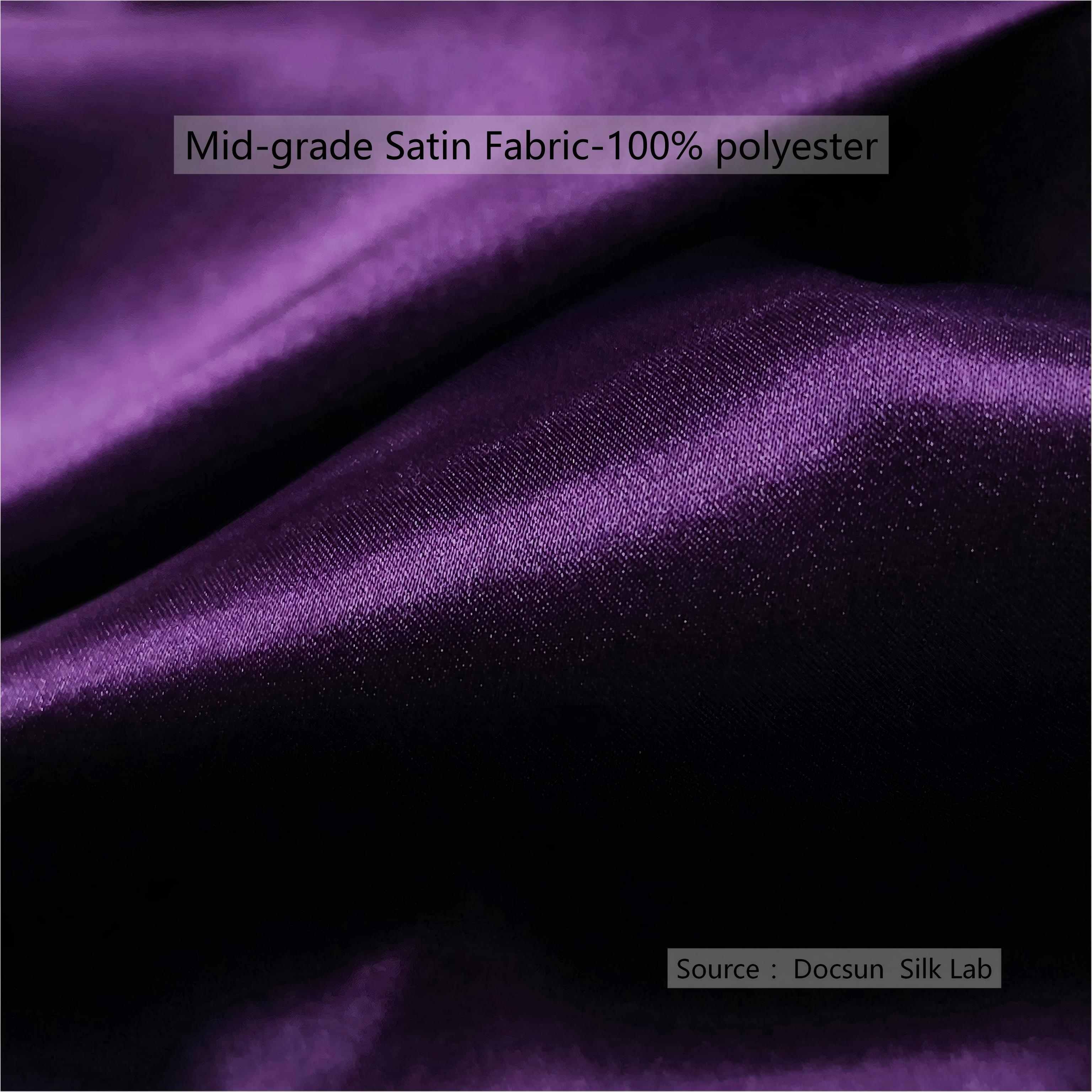
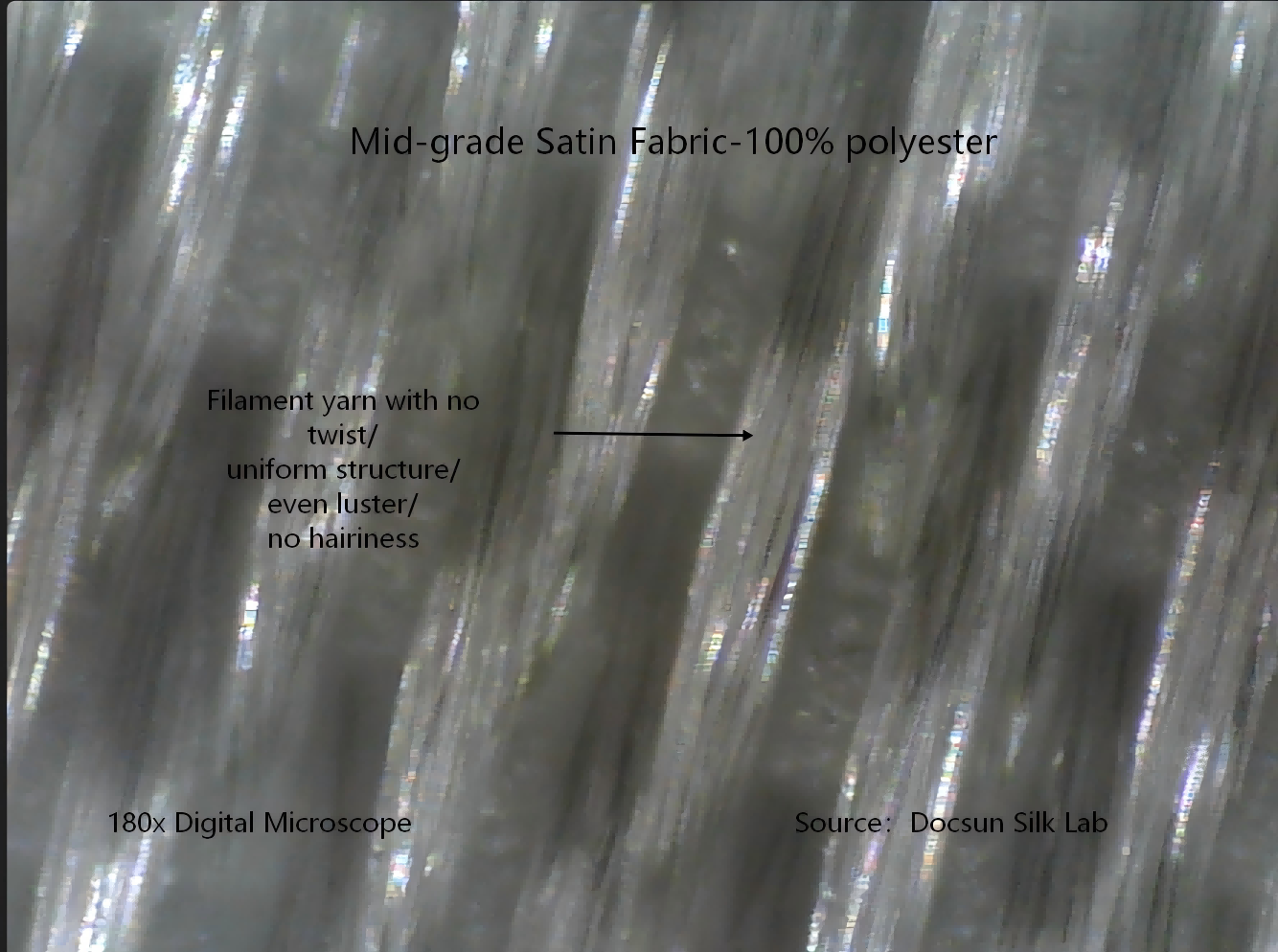
Woven from polyester filament yarns using a zero-twist process. Under the microscope, the overall structure remains neat with uniform light reflection and no fluff.
Because the twisting process is omitted, the surface tension of the yarn is weaker. This makes the fabric more susceptible to snagging during garment manufacturing and daily wear. Its draping quality is moderate; it feels smooth but lacks the dynamic elasticity of premium fabrics.
Fast-fashion brand apparel, mid-to-high-end garment linings, and standard home decor.
Please see the actual fabric shooting video below:
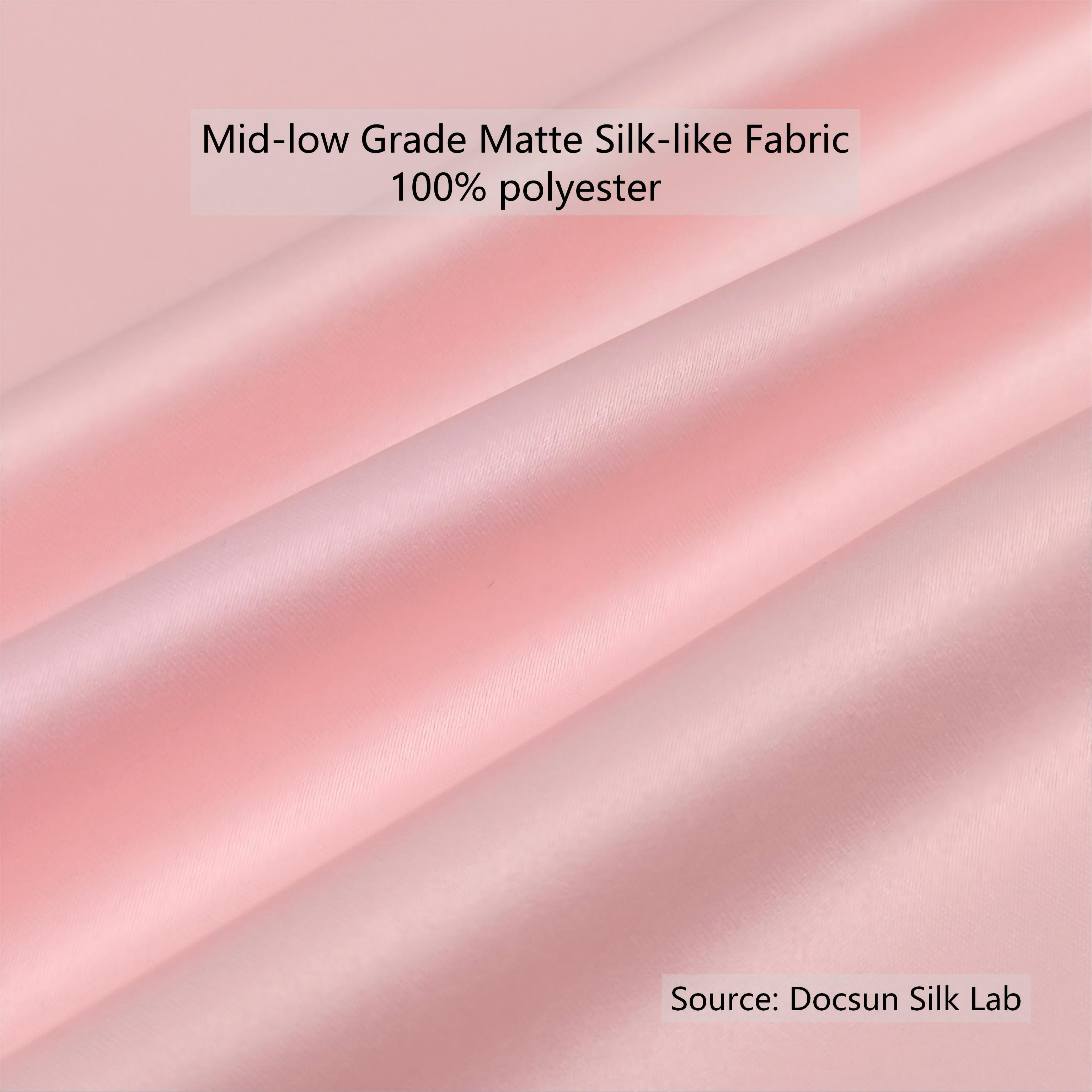
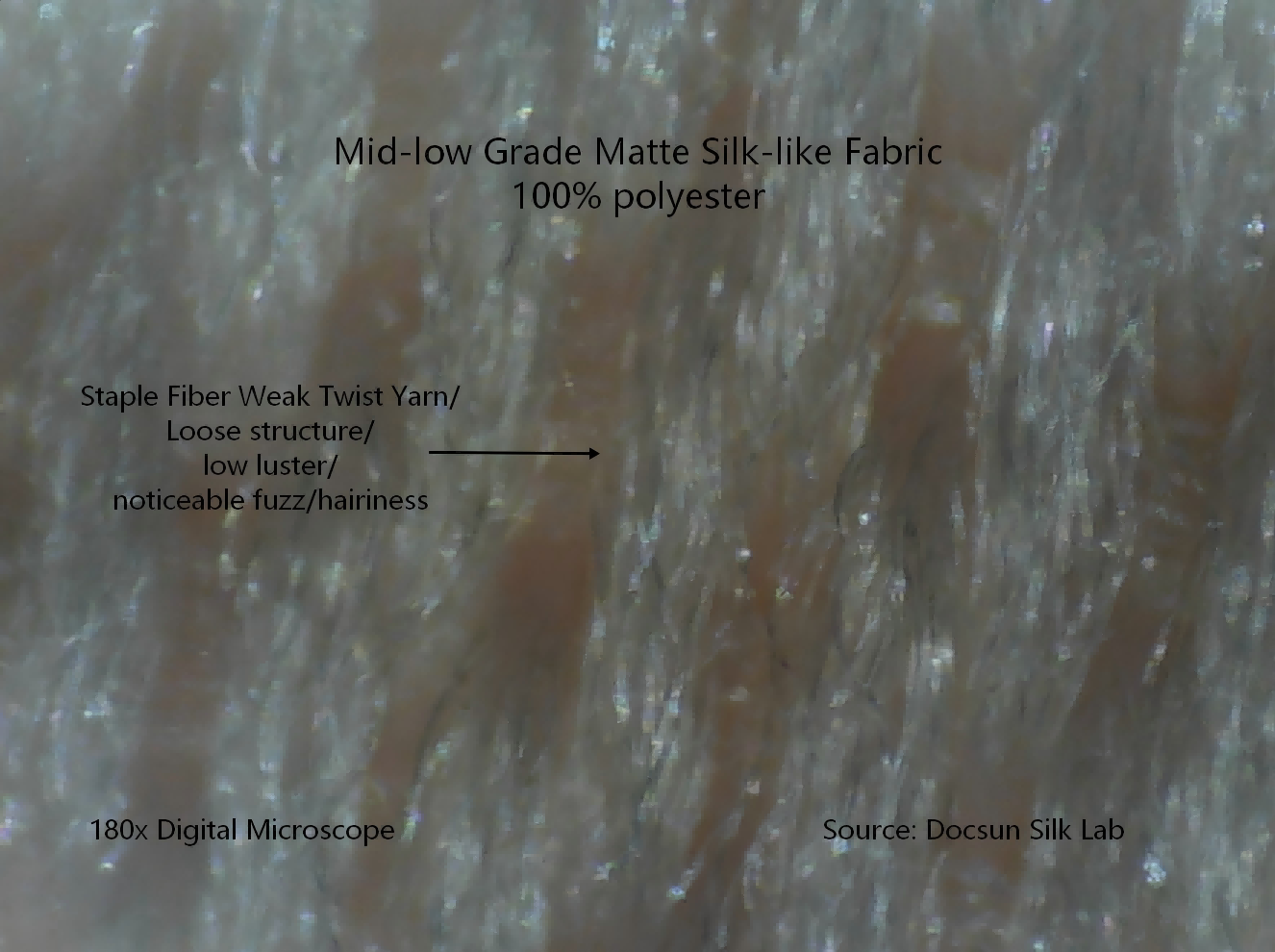
This fabric utilizes staple fibers combined with a weak-twist process. Using staple fibers significantly reduces raw material costs, but results in a loose yarn structure and insufficient yarn density. Under the microscope, distinct microscopic holes are visible, and the surface has a matte finish with noticeable fluff.
This loose staple fiber structure makes the fabric highly prone to pilling after a period of use. Additionally, to further cut costs, manufacturers often reduce the fabric weight (GSM), leading to inadequate drape and a slightly rough, astringent touch.
Disposable event decorations and low-cost packaging linings (not recommended for frequently worn garments).
Please see the actual fabric shooting video below:
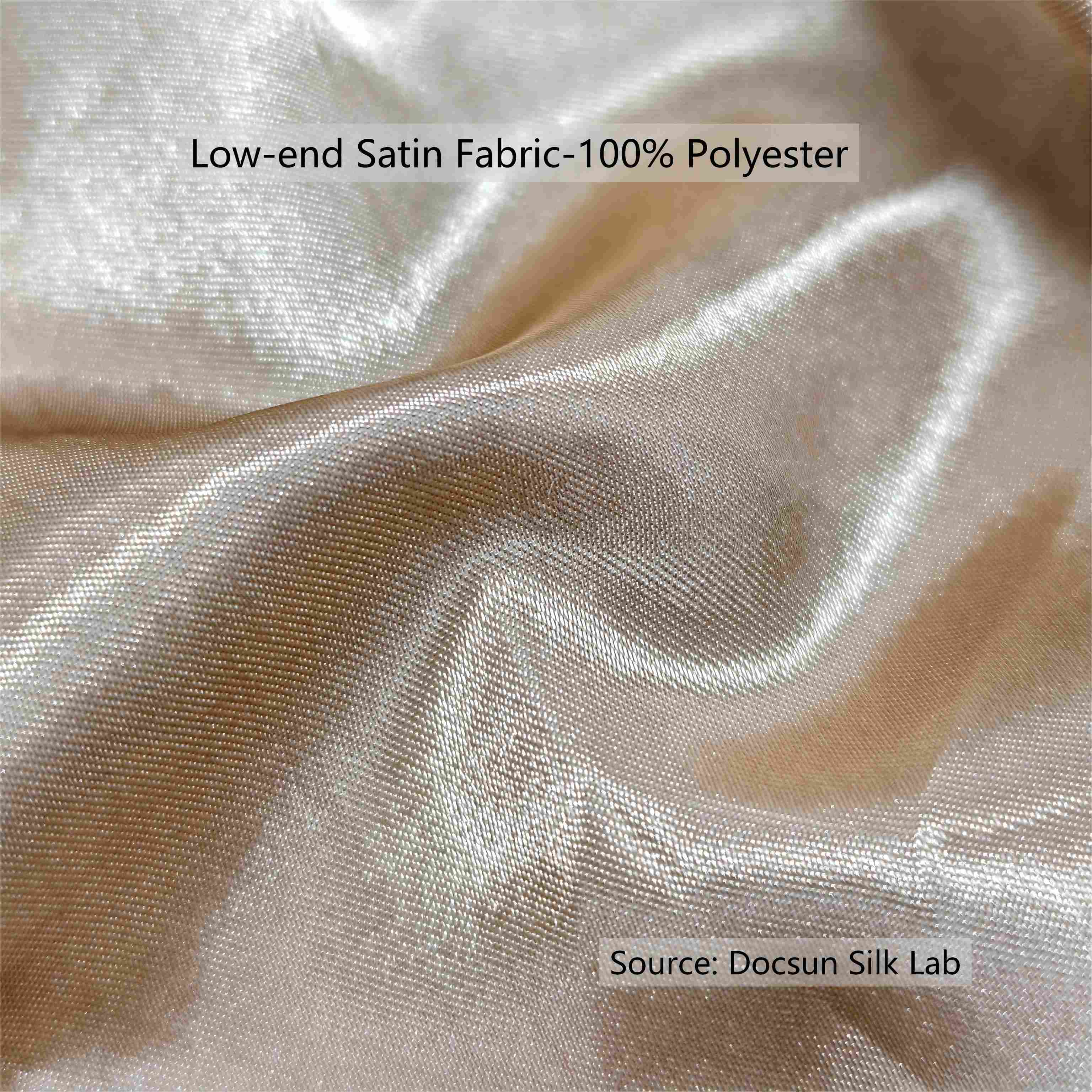
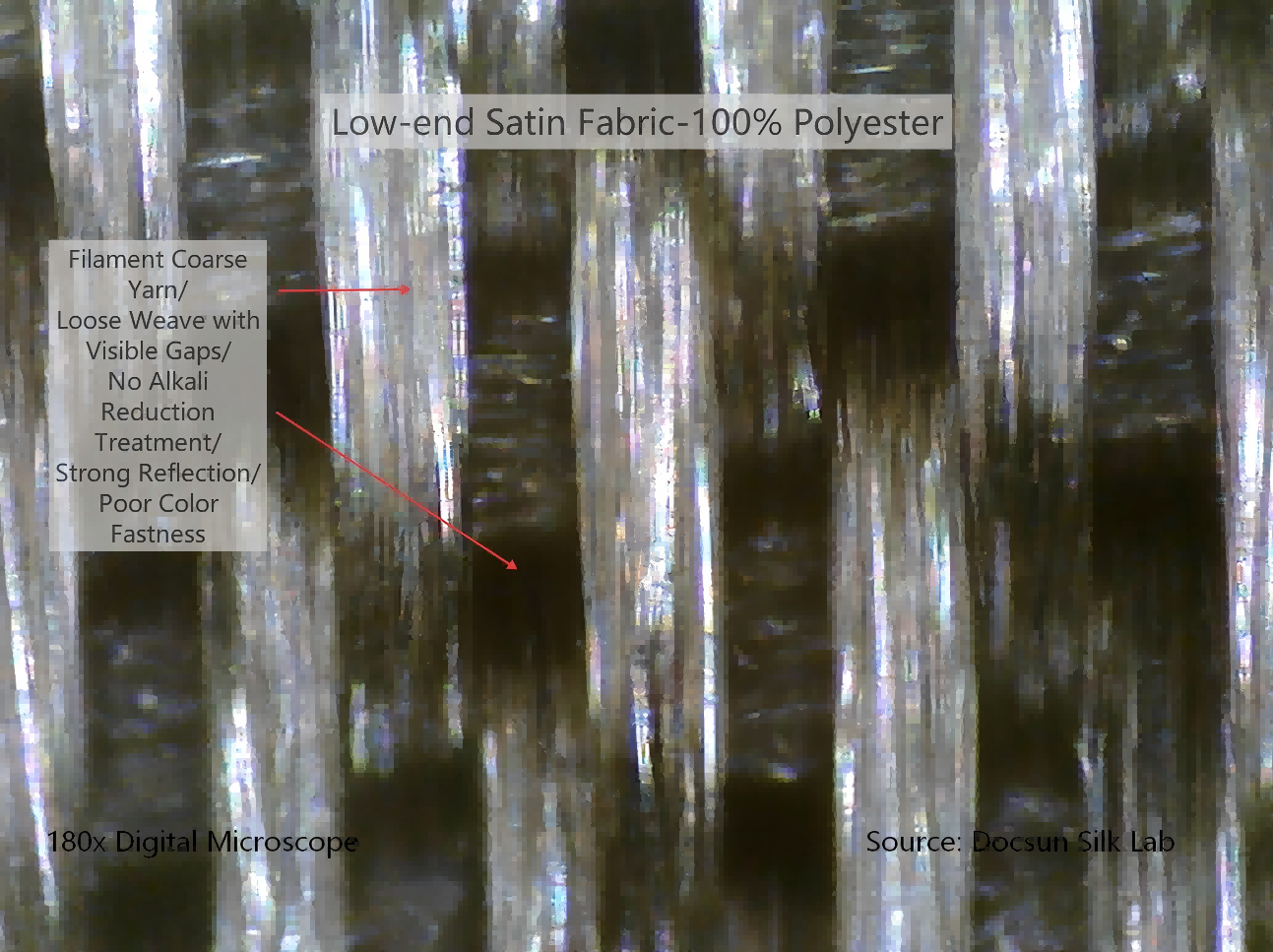
Constructed from continuous filament zero-twist yarns. To maximize cost savings, the yarn density is reduced to approximately half that of premium fabrics within the same visual area, resulting in massive holes under the microscope, and the diameter of individual yarns is doubled.
Unlike the previous three grades, this lowest-grade fabric completely skips the essential "alkali weight reduction" post-processing step to save money. This omission causes a harsh, cheap-looking strong light reflection (harsh shine) and leaves the fabric feeling stiff with a distinct "plastic feel". More critically, skipping this step leads to poor dye adhesion, directly resulting in reduced color fastness (prone to fading).
Throwaway decorations and extremely cheap festive supplies (carries a high risk of customer complaints and returns for apparel; purchase with extreme caution).
Please see the actual fabric shooting video below:
This mainly depends on the yarn twist process. Fabrics woven with zero-twist yarns (such as mid-grade satin) have a looser surface tension, making them significantly more prone to snagging during processing and wear compared to premium fabrics that use a medium-twist yarn process.
Low-end polyester fabrics often skip the essential "alkali weight reduction" post-processing step to save money. This process is supposed to make fibers finer and softer. Skipping it results in a stiff fabric surface with strong, harsh light reflection (a "plastic" look), completely ruining the soft, gentle luster expected of imitation silk.
Absolutely. The 5% spandex provides a crucial slight stretch. This significantly improves wrinkle resistance, enhances the tensile strength of garment seams, and entirely eliminates the rigid feel of pure polyester, delivering an incredibly comfortable, silk-like skin fit.
Yes. Fabrics made with staple fibers and a weak twist have a looser microscopic structure and lower density. This not only creates microscopic holes but also makes the fabric highly prone to pilling and wear after friction. In contrast, continuous filament structures are much tighter and offer superior durability.


