Language
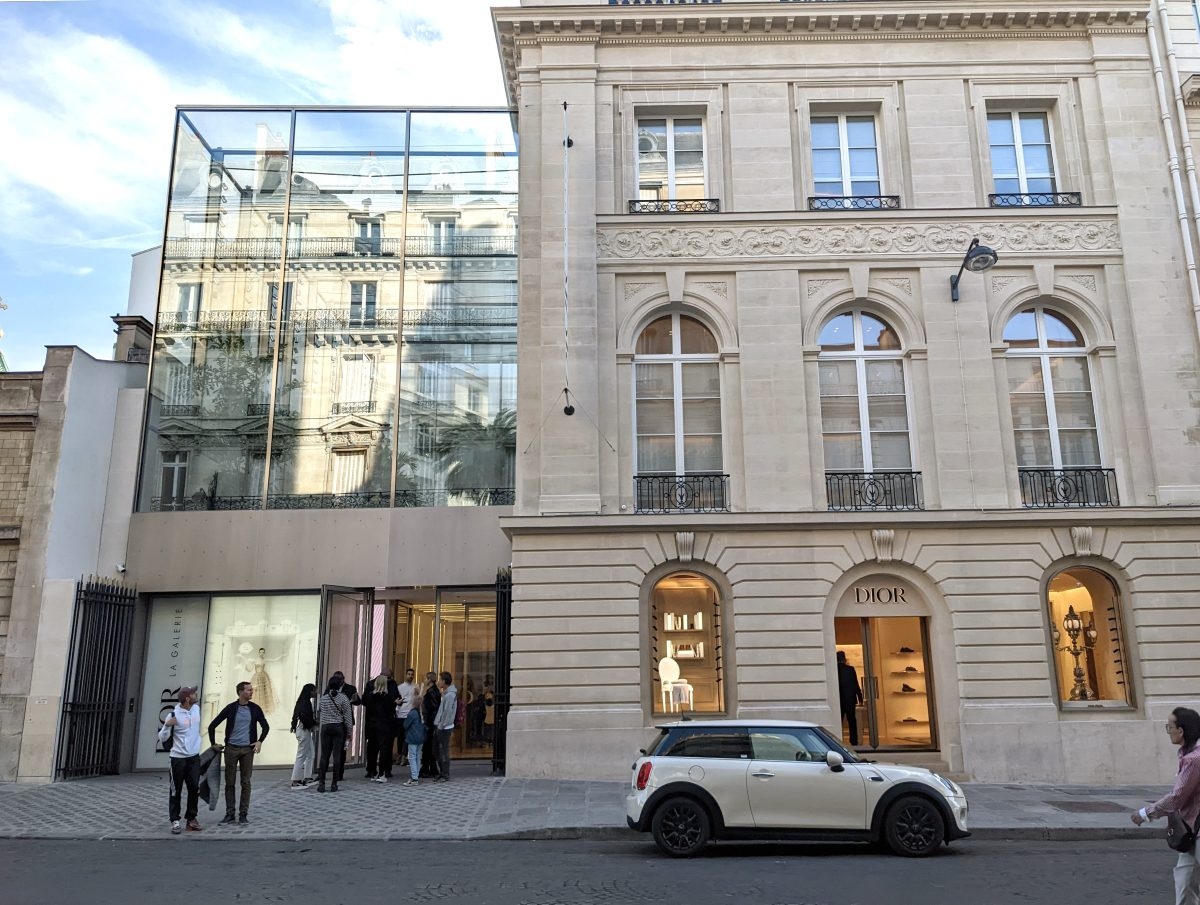 Dior Gallery, 11bis rue François 1er, 8th arrondissement (www.galeriedior.com). Don’t be fooled by this picture, the queue for non-prebooking guests is at an average of 90 minutes waiting. It is wise to book a timeslot on the official website which makes the waiting time down to 20—30 minutes. But do book early, we tried online 5 days before but it’s all fully booked.
This Easter we had a family trip in Pairs. Apart from visiting the must-check-in places like the Louvre and the Versailles, my teen girl also dragged me to La Galerie Dior, i.e. the Dior Gallery on the last day, which was a wonderful experience. I was so inspired by the visual effects of their showrooms, as well as the vast amount of Dior’s silk dresses with such details on them.
Tucked behind the elegant façade of Avenue Montaigne, La Galerie Dior offers more than a retrospective of a fashion house—it is an immersive narrative of craftsmanship, femininity, and the transformative power of fabric. Among the many elements that define the legacy of Dior, silk and embroidery emerge as central storytellers, embodying both the heritage and innovation that have shaped the house since its founding.
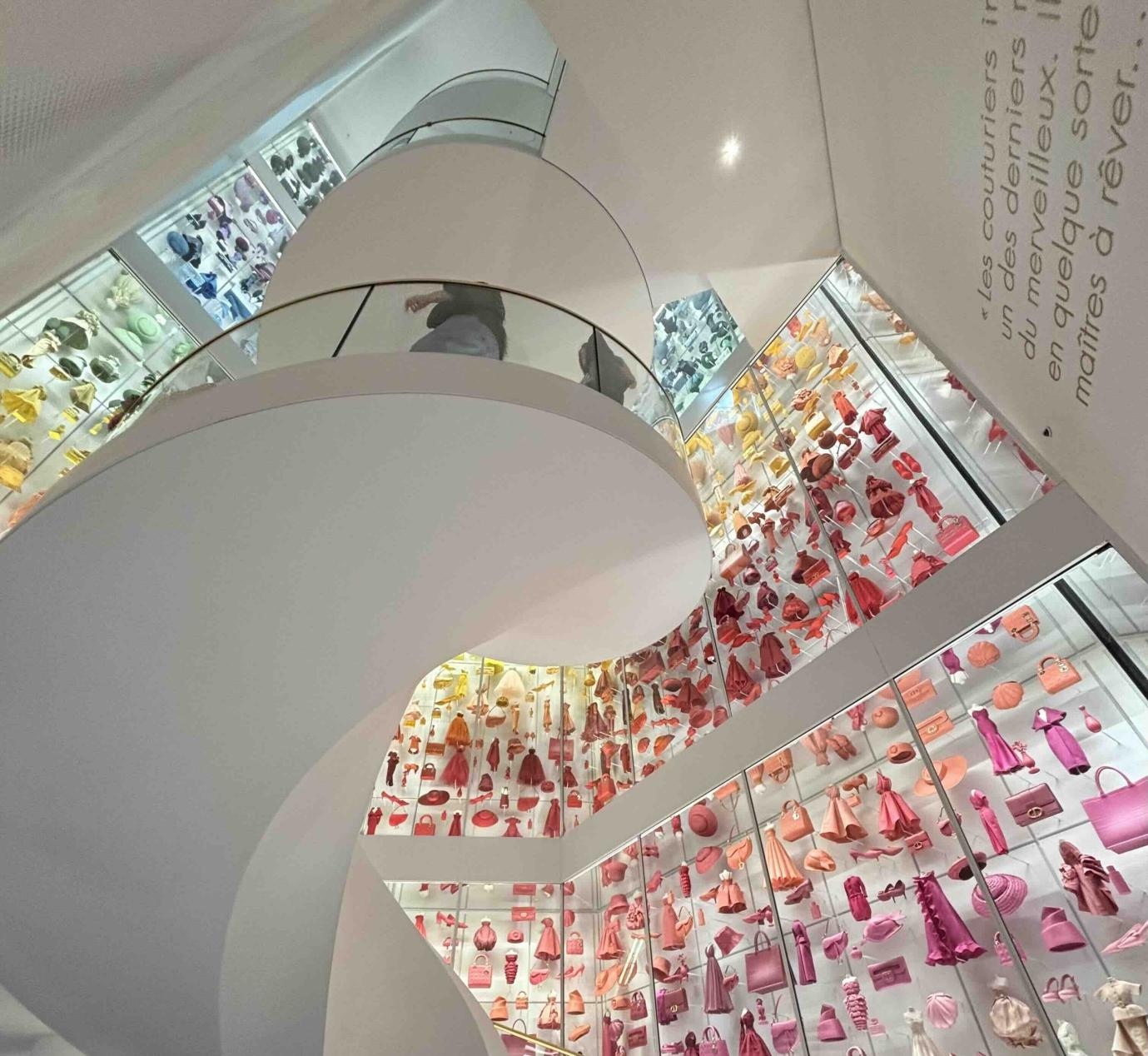 Main hall display in the gallery. The exhibition starts from the third floor and floats downwards. It felt amazing to walk on spiral staircase as the way out. (photo by Grace Pan)
The story begins with Christian Dior, who established his maison in 1946, in the aftermath of World War II. At a time when austerity dominated both life and clothing, Dior introduced a radically different vision. His debut collection in 1947, famously dubbed the "New Look," redefined femininity with cinched waists, voluminous skirts, and an unapologetic celebration of luxury.
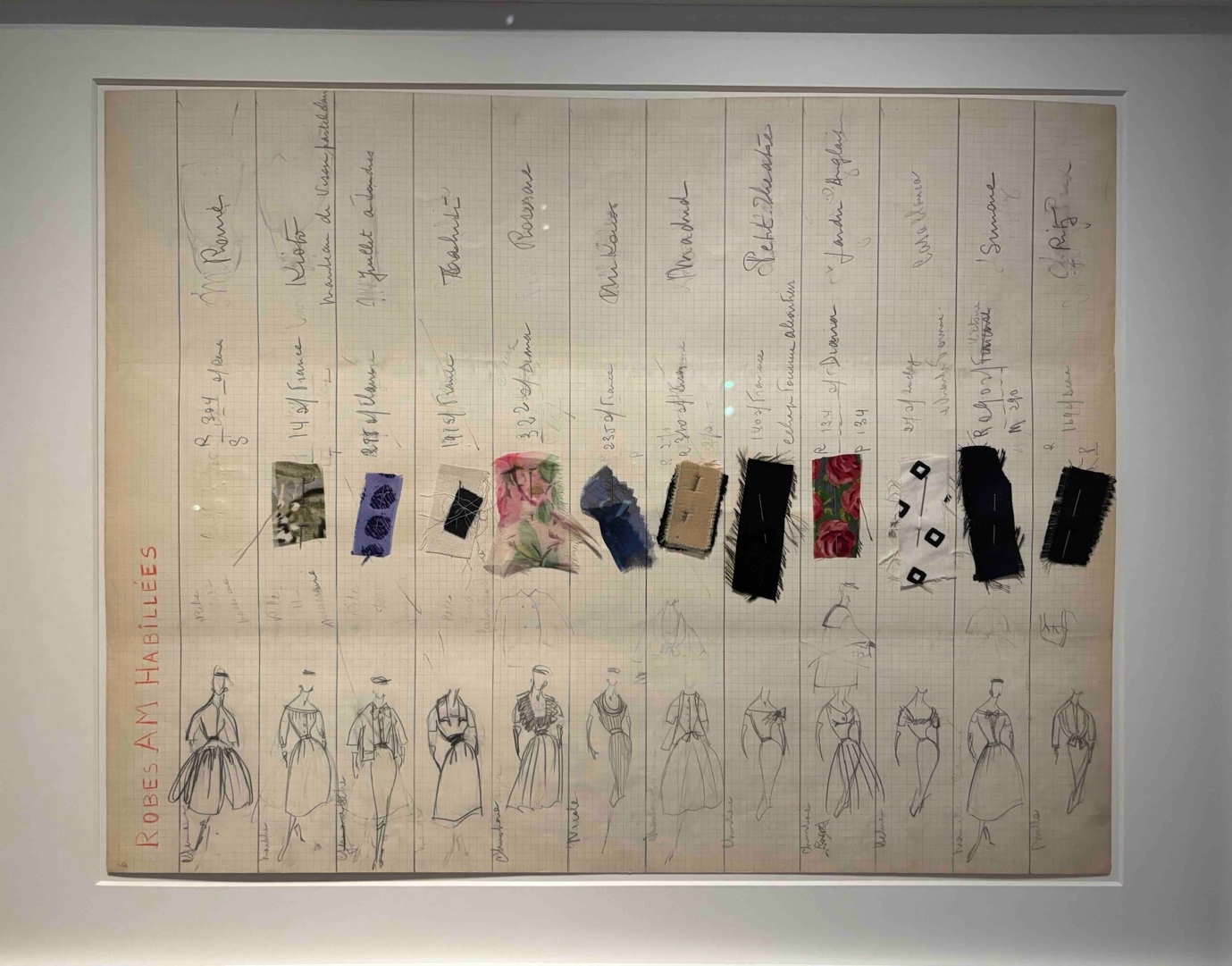
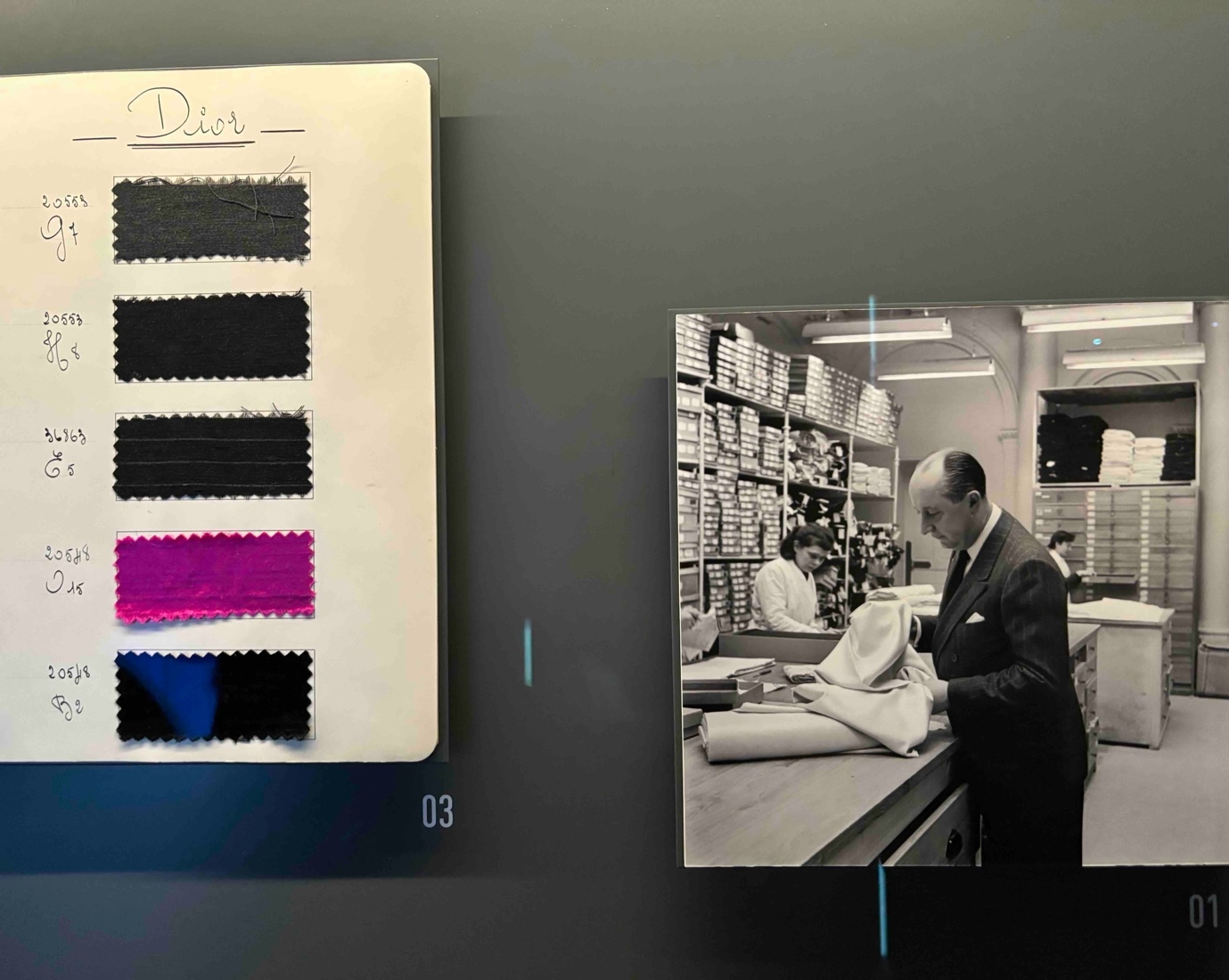 A picture of Mr Christian Dior checking fabrics and his fabric notes. (Photo by Grace Pan)
Silk played a crucial role in this transformation. Flowing yet structured, delicate yet commanding, silk allowed Dior to sculpt garments that moved with grace while maintaining architectural precision. This interplay between softness and structure became a defining characteristic of the house.
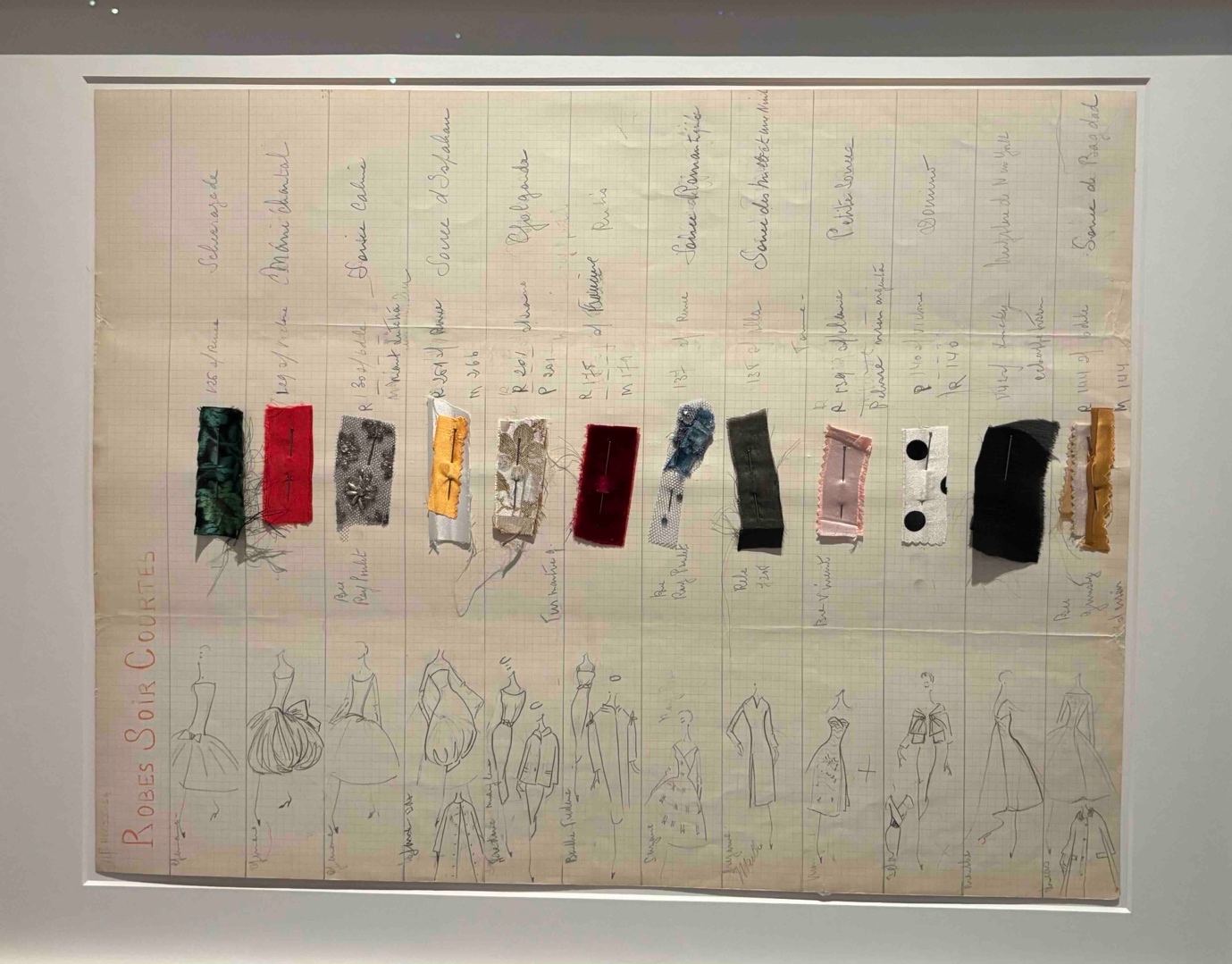 Dior’s fabric file for each designer dress, various fabrics were used, among them silk took a large portion of the fabric choice. For a modern take on bespoke tailoring, explore our Fabric collection and customization. (Photo by Grace Pan)
 (Photo by Grace Pan)
As Dior rose to global prominence in the late 1940s and 1950s, silk dresses became synonymous with the brand’s identity. In La Galerie Dior, visitors encounter these iconic silhouettes—ball gowns cascading in layers of silk taffeta, cocktail dresses shimmering in silk satin, and daywear pieces that elevate simplicity through refined material choices. Discover more about the application of silk in our elegant silk dress collection.
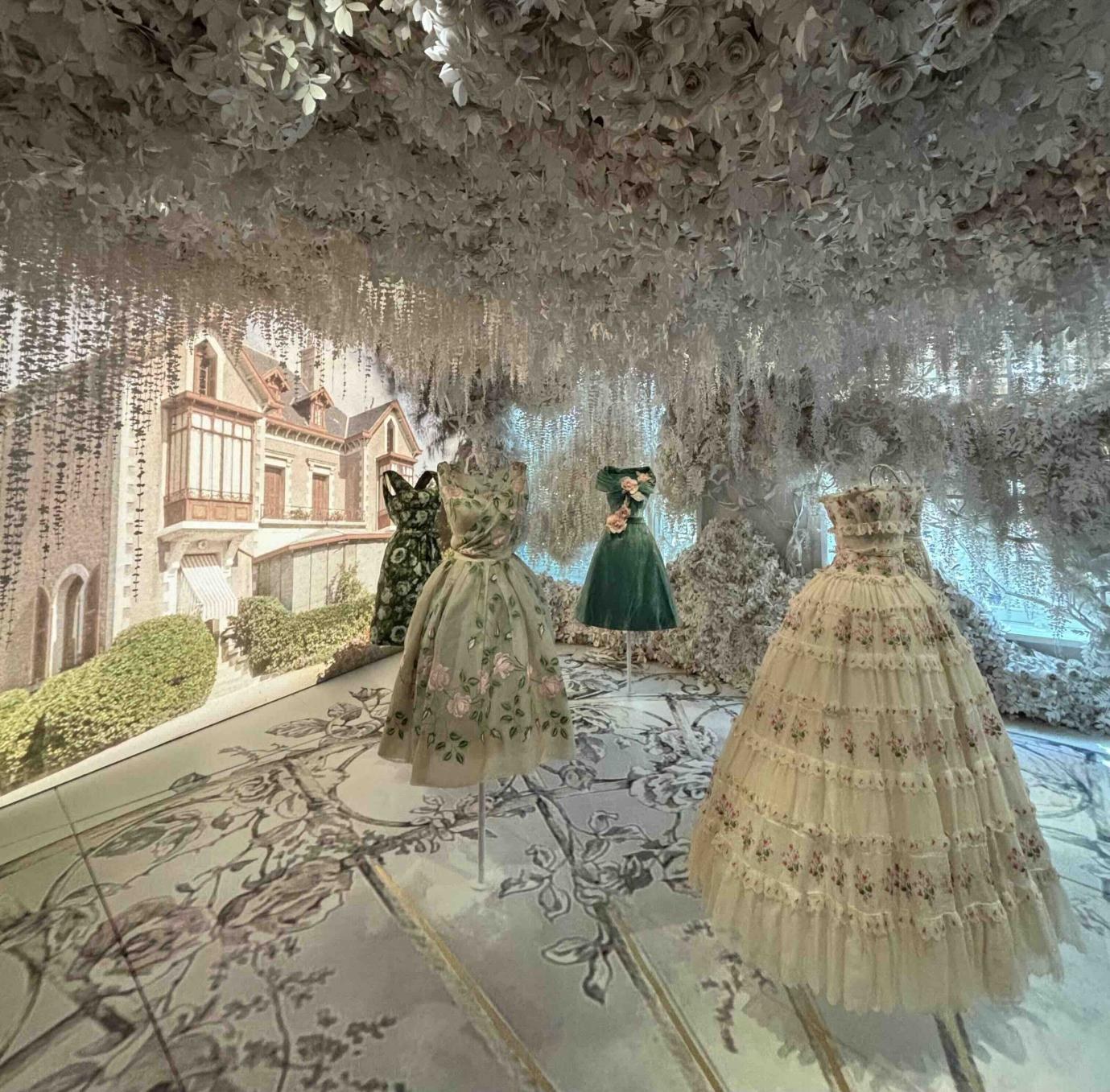 Dior mulberry Silk Chiffon Gown (Photo by Grace Pan)
What distinguishes Dior’s use of silk is not merely its luxury, but its versatility. The house has consistently explored a wide spectrum of silk types, from the crispness of organza to the fluidity of chiffon. Each fabric is selected with intention, serving both aesthetic and structural purposes.
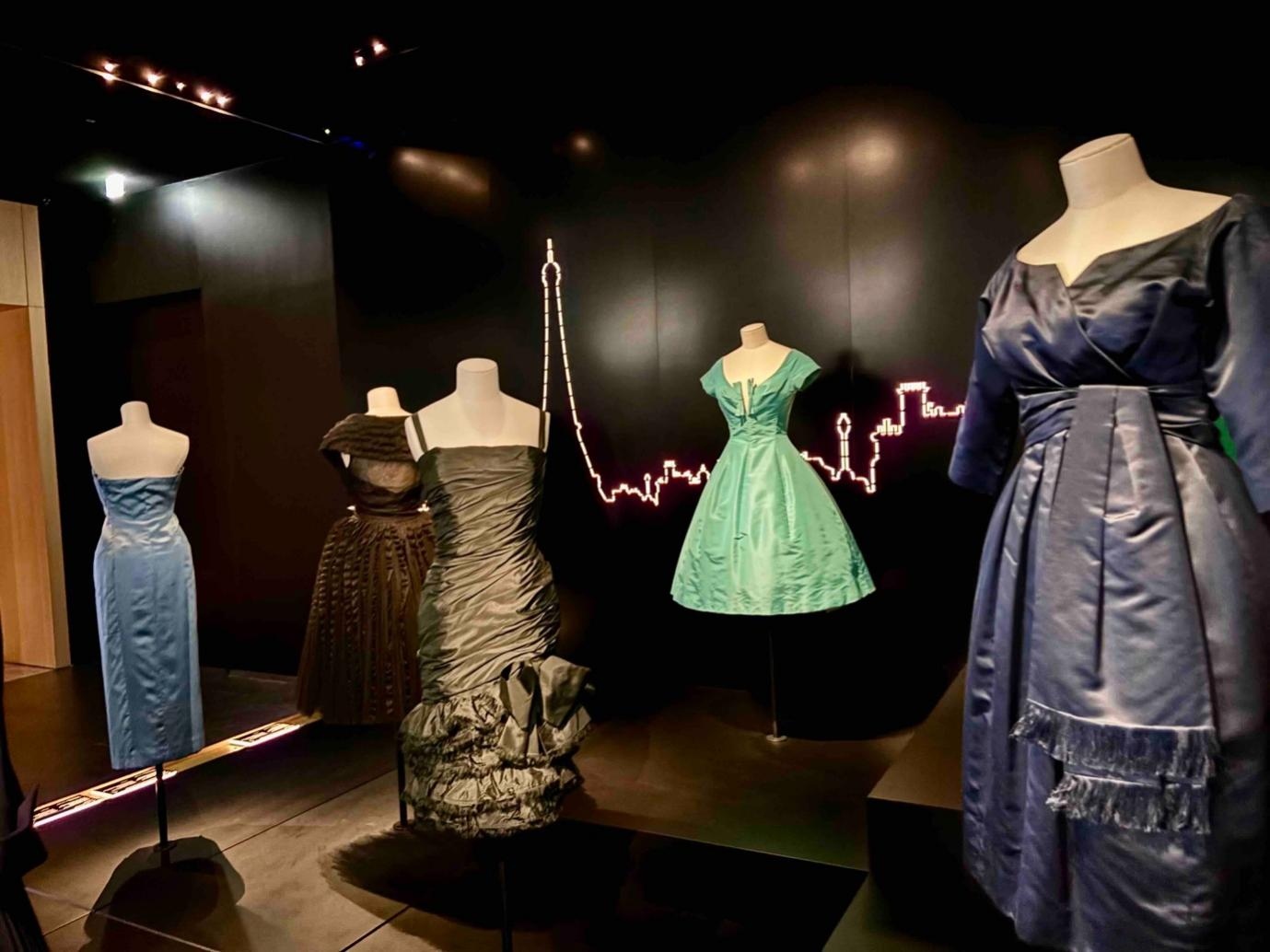 Dior Mulberry Silk Taffeta (Photo by Grace Pan)
Silk, for Dior, is never passive. It is shaped, layered, pleated, and sometimes even manipulated to mimic other textures. In certain designs, silk is engineered to hold dramatic volume, creating the iconic bell-shaped skirts that defined post-war couture. In others, it drapes softly along the body, emphasizing movement and sensuality. This duality reflects Dior’s broader philosophy: fashion should be both dreamlike and grounded, extravagant yet wearable.
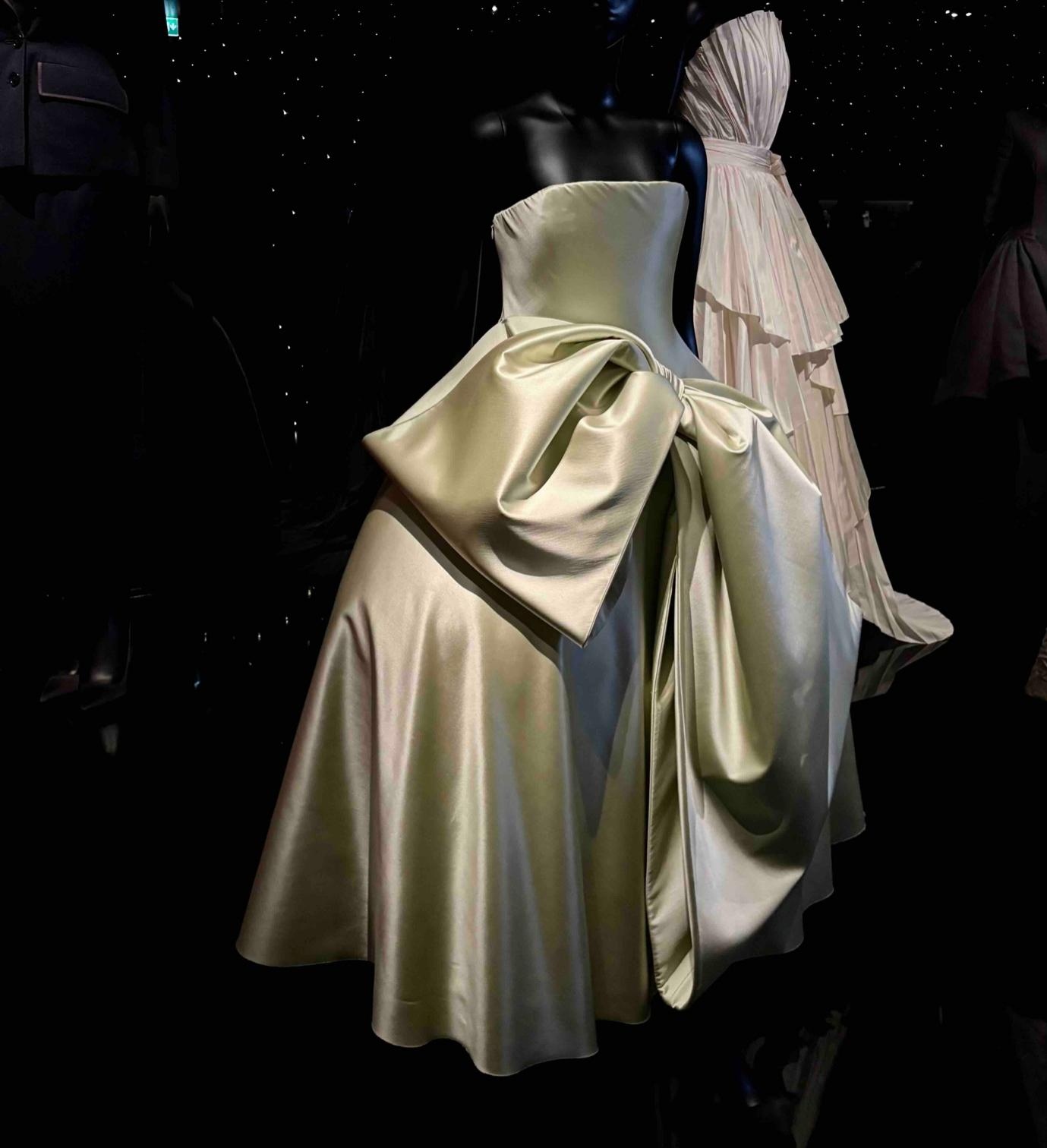
Dior Mulberry Silk Heavy Satin (Photo by Grace Pan)
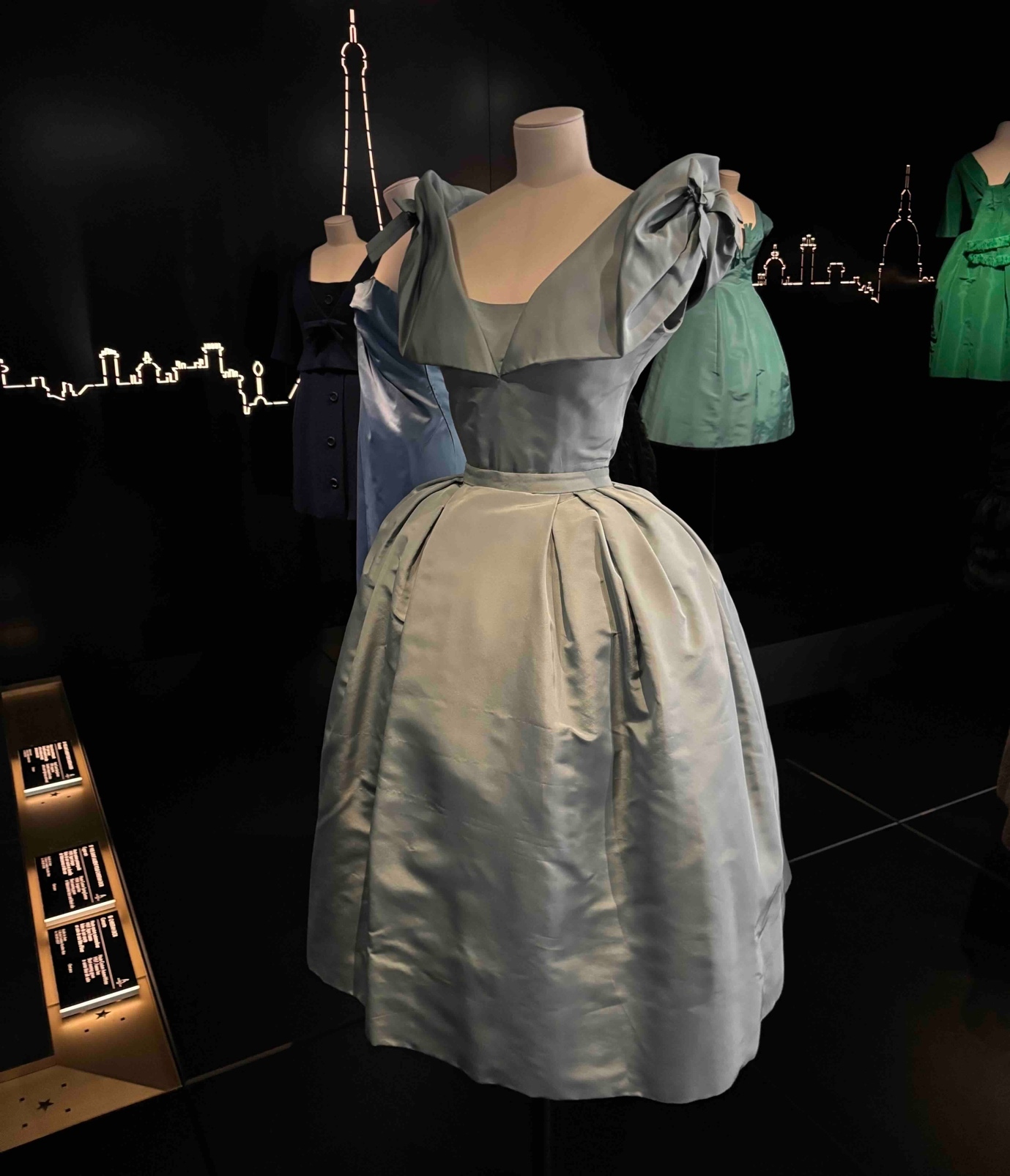 Dior Mulberry Silk Taffeta. Despite wondering who was the lady with such a small waist, I especially like this dress because of the beautiful curves flowing down from the shoulders, and elegant colour choice to bring out the subtle sheen on the silk. (Photo by Grace Pan)
Embroidery, meanwhile, adds another dimension to Dior’s storytelling. Walking through the museum, one is struck by the intricate detailing that transforms garments into works of art. Embroidery at Dior is not merely decorative—it is narrative. Floral motifs, a recurring theme inspired by Christian Dior’s love of gardens, are rendered in delicate threads and beads, turning dresses into living landscapes. These embellishments often require hundreds of hours of meticulous handwork, underscoring the importance of artisanal craftsmanship within the house.
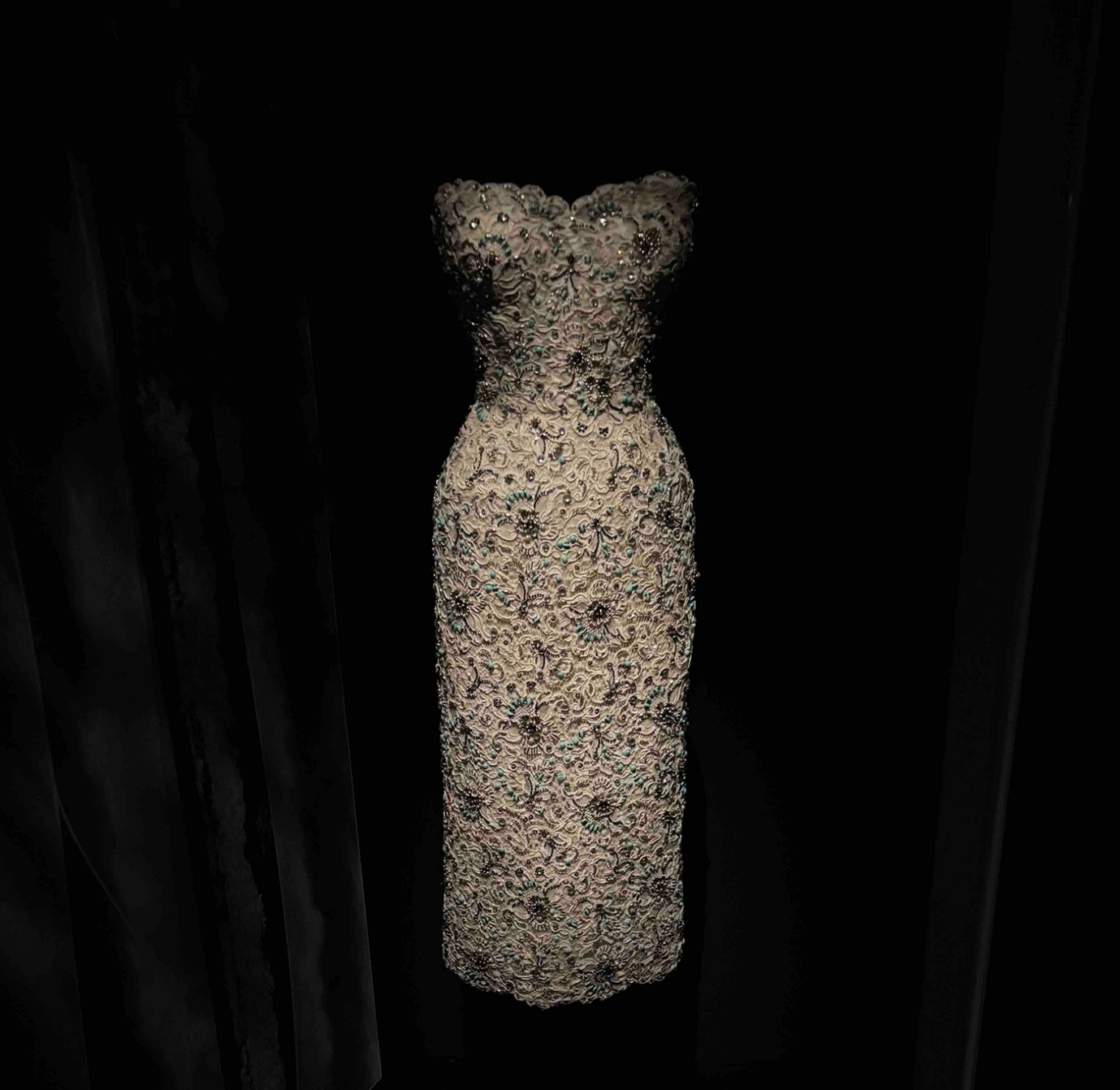 Haule Coulure Spring-Summer 1953, Tulipe line Evening sheath dress in embroidered guipure lace (Photo by Grace Pan)
The collaboration between Dior and renowned embroidery ateliers has been essential to this process. Techniques passed down through generations are continually reinterpreted, allowing the house to maintain tradition while embracing modernity. In many pieces displayed at La Galerie Dior, embroidery interacts seamlessly with silk, enhancing its natural sheen and texture. Light catches on beaded surfaces, creating a dynamic interplay between fabric and ornamentation that changes with movement and perspective.
Accessories, too, reflect this dedication to detail. Silk scarves, embroidered bags and shoes, often overlooked in discussions of haute couture, play a significant role in Dior’s visual language. Printed with intricate patterns or adorned with subtle embroidery, they echo the themes seen in the garments while offering a more accessible entry point into the brand’s aesthetic.
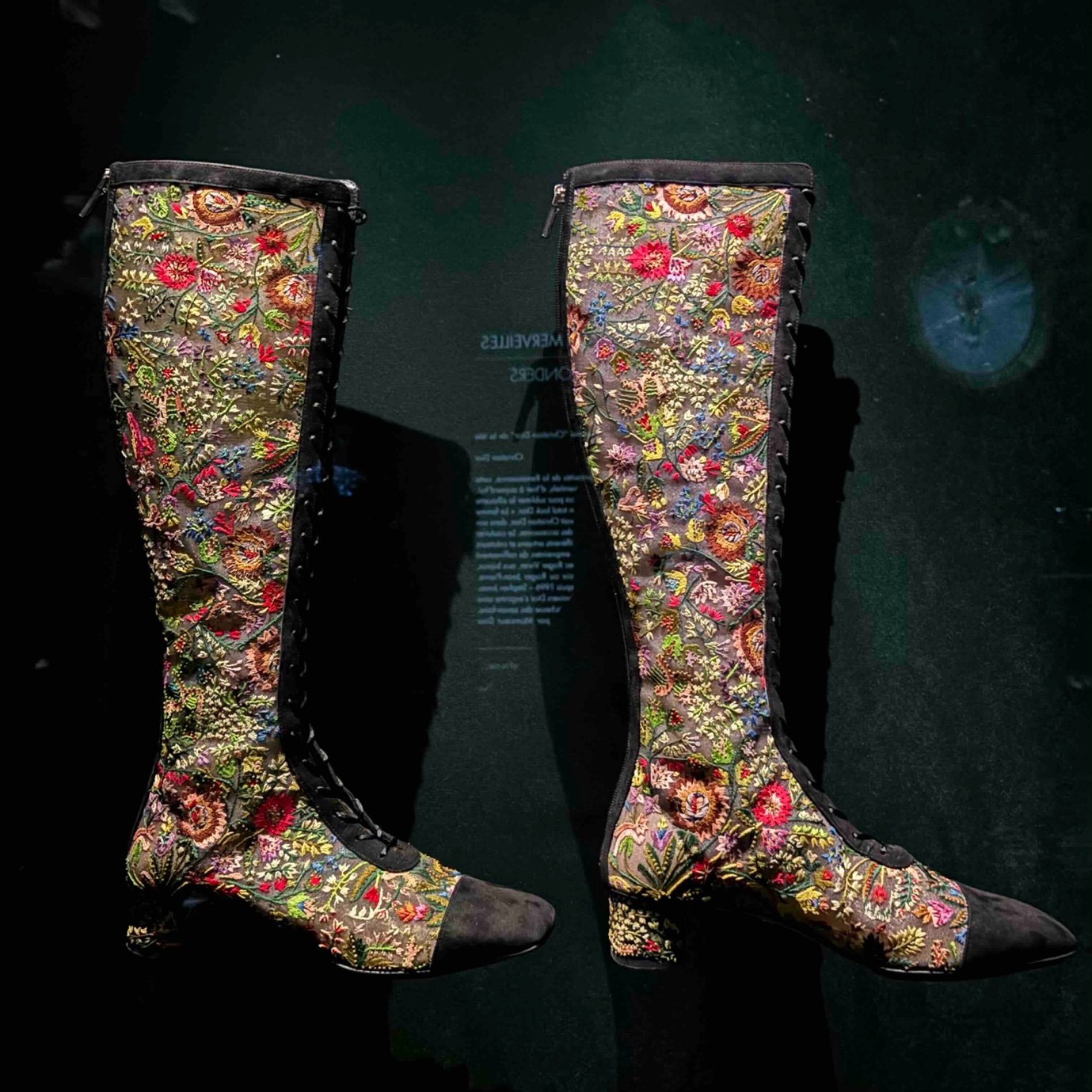 Dior Embroidered boots (Photo by Grace Pan)
Over the decades, successive creative directors have continued to reinterpret Dior’s legacy, yet silk and embroidery remain constants. Whether through the romantic minimalism of later collections or the bold reinterpretations of contemporary designers, these elements serve as a bridge between past and present. They preserve the essence of Dior while allowing for continuous evolution.
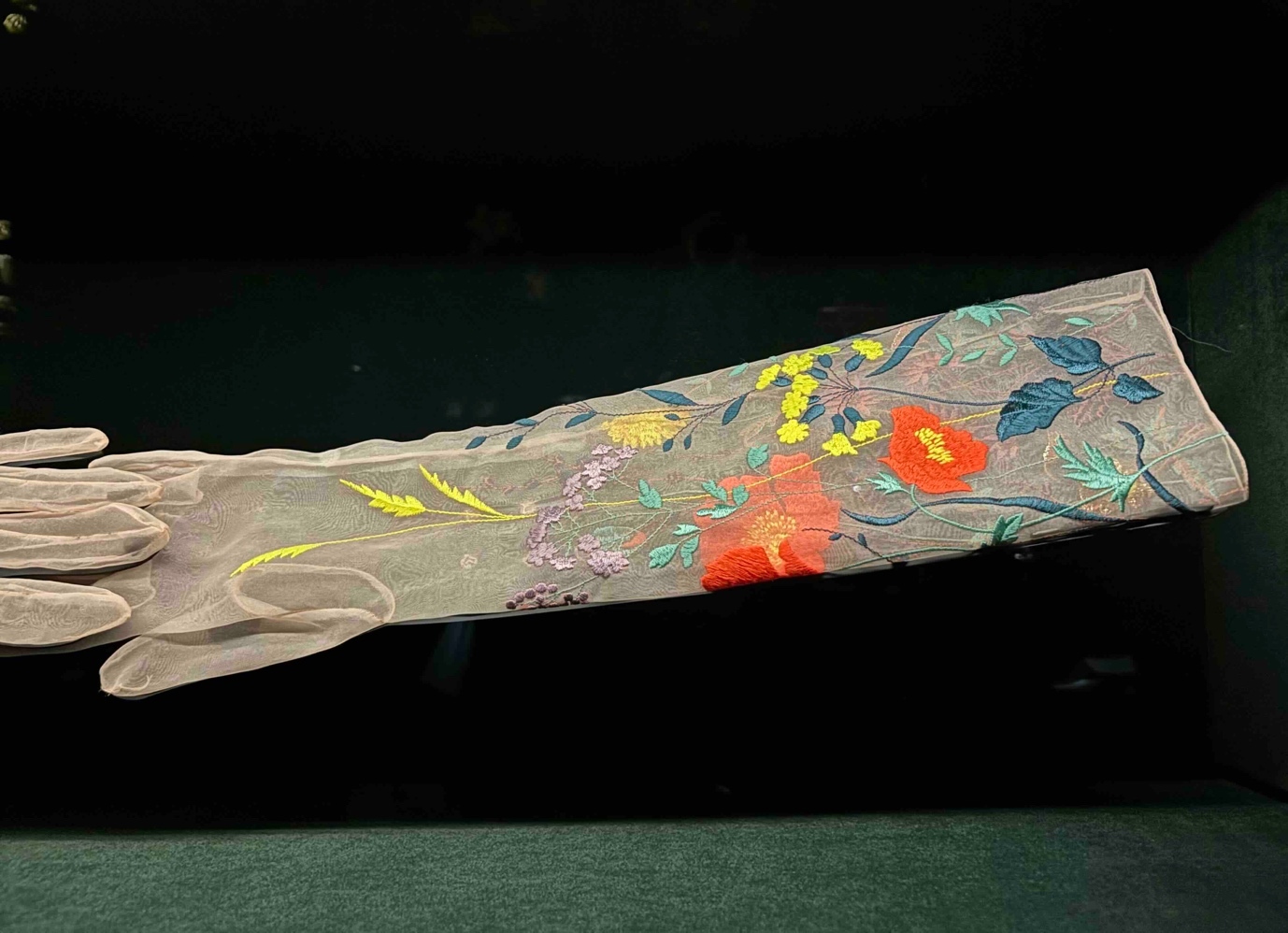 Dior embroidered glove (Photo by Grace Pan)
Experiencing La Galerie Dior in person brings this legacy into sharp focus. The museum’s displays do more than showcase garments; they reveal the processes, materials, and inspirations behind them. Seeing silk dresses up close—their textures, their weight, their intricate construction—offers a deeper appreciation of the craftsmanship involved. Photographs, while beautiful, can only capture a fraction of this complexity. It is in the physical presence of these pieces that one truly understands the artistry of Dior.
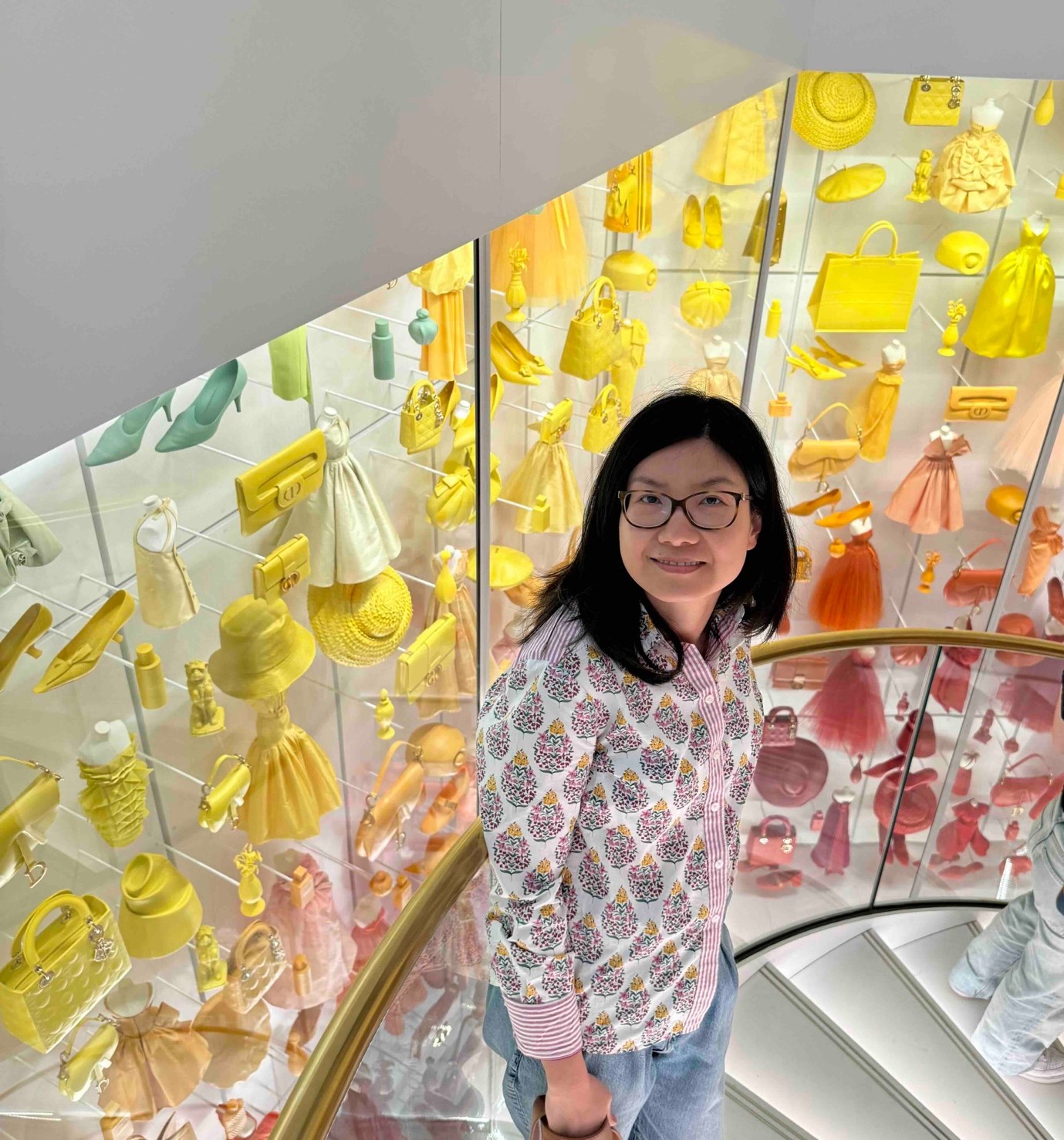 Photo of the author while walking down the stairs to exit Dior’s fantasy world, feeling very inspired.
Ultimately, the story of Dior is one of transformation—of fabric into form, of thread into narrative, of vision into reality. Silk and embroidery are not merely materials within this story; they are its language. Through them, Dior continues to communicate a timeless vision of elegance, one that resonates as strongly today as it did in 1947.
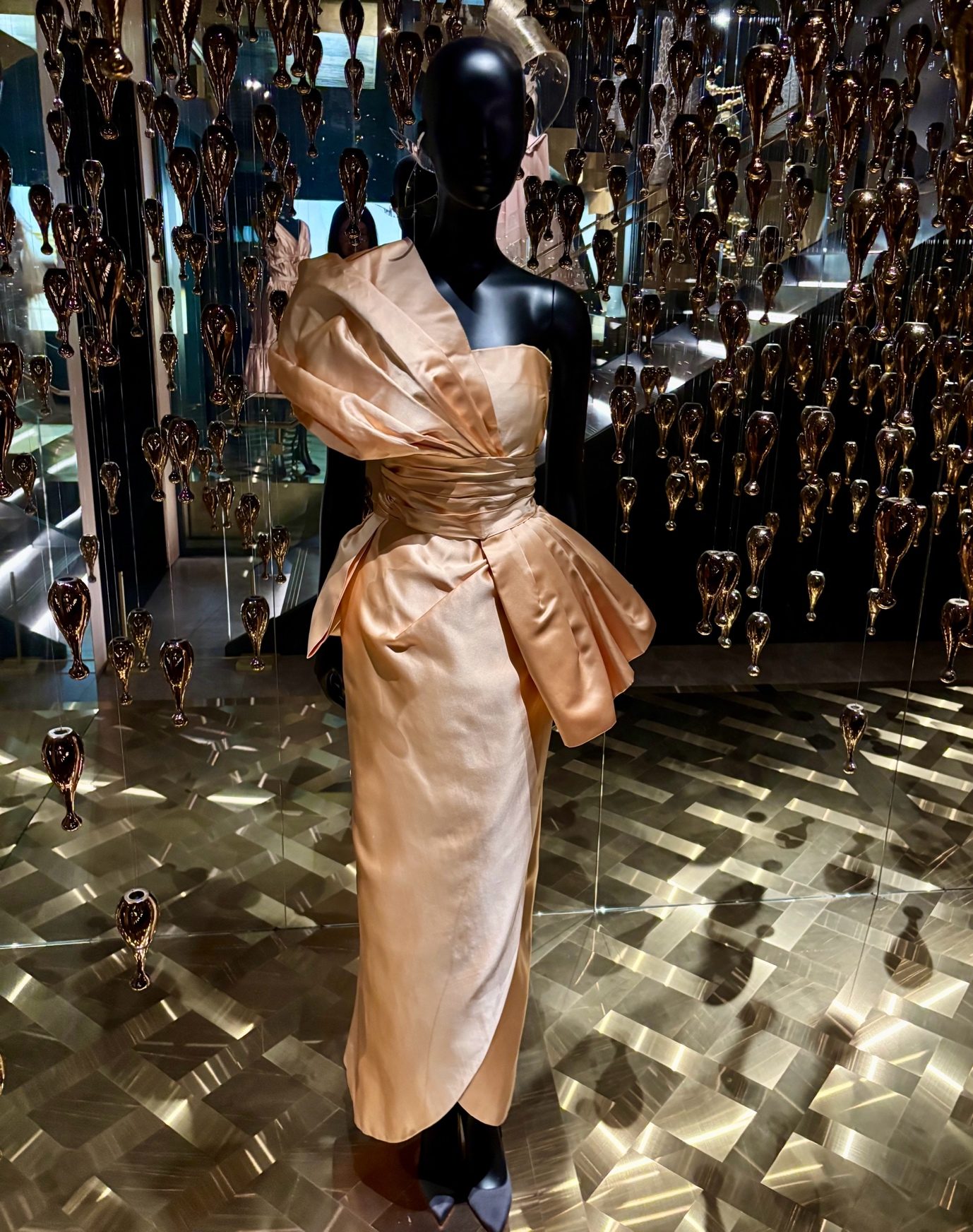 The gallery changes its display from time to time. The official website shows that it will be temporarily closed to the public from May 18 to June 9 inclusive in 2026. So next time you visit La Galerie Dior, you may see many different dresses and accessories! (Photo by Grace Pan)
Yes, it is highly recommended to book a timeslot on the official website well in advance. Walk-in queues can average around 90 minutes, whereas pre-booking significantly reduces the waiting time to just 20-30 minutes.
If you do not pre-book, the queue typically requires a 90-minute wait. With an online reservation, the waiting time drops to approximately 20-30 minutes.
Dior's haute couture features a wide spectrum of silk fabrics, including the crispness of silk organza, the fluidity of silk chiffon, shimmering silk satin, and structured silk taffeta, each selected for specific aesthetic and structural purposes.
Silk perfectly captures the duality of Dior’s vision: it is both flowing and structured. It allows garments to move with grace while holding architectural precision, such as the dramatic volume required for post-war bell-shaped skirts.
La Galerie Dior is located at 11bis rue François 1er, in the 8th arrondissement of Paris, elegantly tucked behind Avenue Montaigne.


