Language
Author: Sophie Chen
Source: Docsun Home and Living
Table of Contents
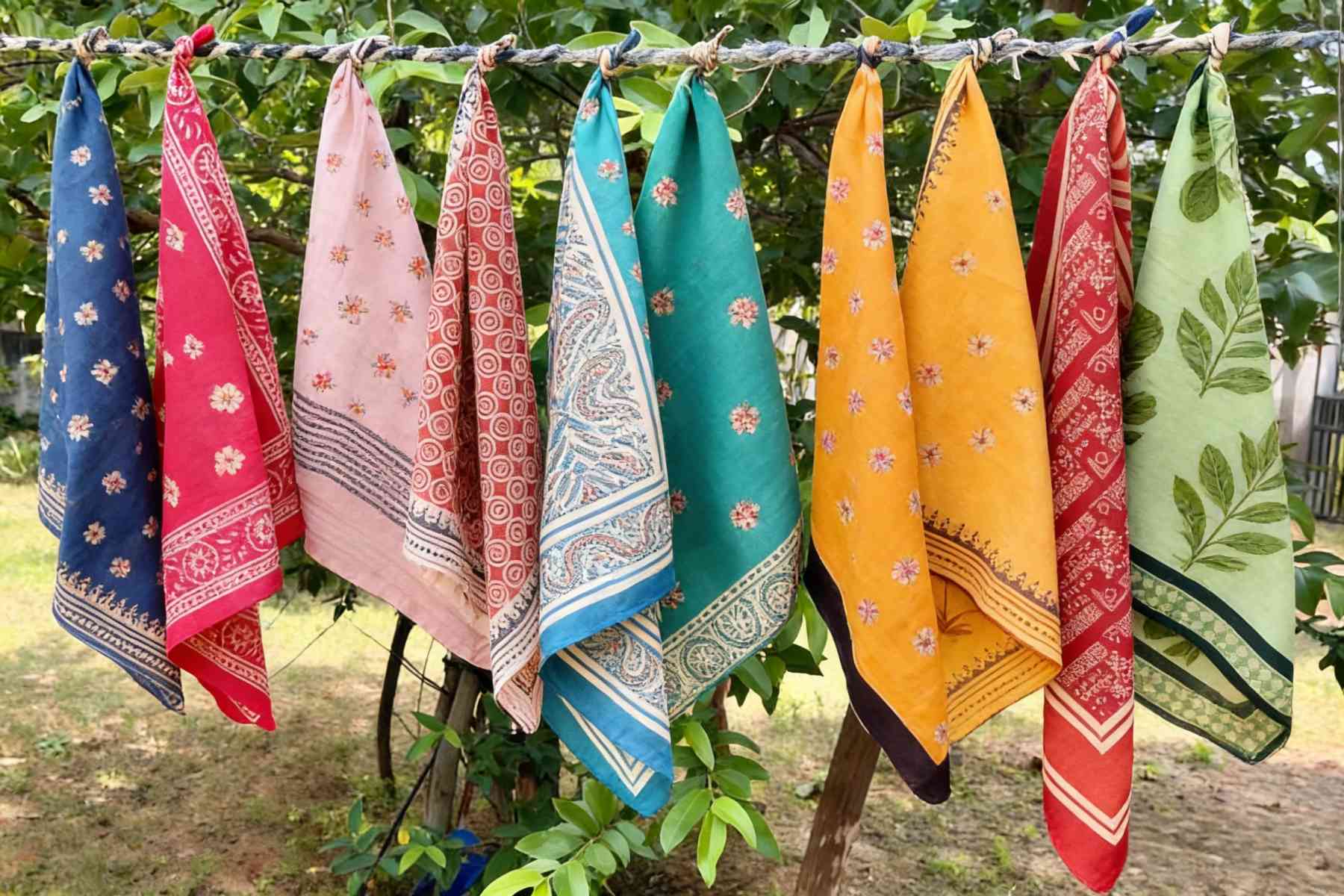 Our premium custom bandanas are crafted with meticulously selected natural fibers and eco-friendly printing techniques.
As a highly iconic and versatile accessory, bandanas hold a significant place in streetwear, outdoor sports, and high fashion, making them a staple in our premium scarf collection. However, for brands seeking high-quality customization, mass-market options often result in terrible consumer feedback. Through in-depth market research, we have identified several major pain points:
Stuffy & Slippery Materials: Cheap polyester is non-breathable, fails to absorb sweat, and causes severe microplastic pollution. Conversely, pure silk is luxurious but has extremely low friction, making it difficult to secure and prone to slipping off the hair.
Pilling & Color Fading: Products made from short-fiber knitted fabrics tend to pill after minor daily friction. Furthermore, inferior dyeing processes lead to severe color bleeding, potentially staining skin or light-colored clothing.
Restrictive Sizing: The standard 55cm x 55cm (22" x 22") size is highly unfriendly to people with larger head circumferences or voluminous hair (such as dreadlocks or thick curls), making it nearly impossible to tie securely and limiting its styling versatility.
Many clients complain: "The care label says 100% Cotton, but it feels like cardboard and doesn't absorb a drop of sweat." This is an industry reality caused entirely by manufacturers attempting to excessively cut costs. There are three main culprits:
Using Cheap, Low-Count Yarns: To save money, inferior bandanas typically use 30S or lower-count cotton yarns. These yarns are inherently thick, stiff, and full of impurities, directly resulting in a rough overall texture.
Cheap Pigment Printing: This is the primary reason for fabric stiffness. This outdated method uses resin glue to forcefully "stick" the pigment onto the fabric surface. The glue not only makes the fabric feel stiff but also completely clogs the natural pores of the cotton fibers, stripping them of their ability to absorb water and breathe.
Skipping the Crucial Post-Print Washing & Softening: Properly printed fabrics must undergo thorough washing to remove floating dyes and production sizing agents, followed by professional softening treatments. Cheap products skip this step to save time and effort, leaving a massive buildup of sizing and dyes that turns what should be a soft, sweat-absorbing cotton into a rigid board.
To completely revolutionize this poor user experience, Docsun Home and Living has shifted focus to premium Natural Fibers and innovative sizing designs.
Commitment to Natural Fibers & Woven Techniques: All our carefully selected fabrics utilize a Woven Plain Weave structure. This tight construction fundamentally eliminates the risk of pilling and contains zero microplastics.
Breaking Size Restrictions (Oversized Solutions): Addressing the pain point of large head circumferences, we highly recommend customizing 55cm to 65cm oversized bandanas. The 65cm large size can not only easily wrap around thick hair but can also be used as a bandana top, a large pet bandana, or a shawl, greatly expanding the product's versatile applications.
We recommend the following three high-end fabric options that have been extensively market-tested and bulk-shipped:
This fabric achieves the perfect balance between the luxurious luster of silk and the durability of cotton, making it the top choice for high-end brand accessories or corporate gifts.
Physical Properties: The 9 Momme thickness makes it lightweight and flowy without being overly thin. It absorbs sweat far better than polyester and is softer and quicker to dry than pure cotton. Crucially, the addition of cotton significantly increases friction, solving the slipping issue of pure silk.
Visual Effect: The fabric surface features a subtle, premium natural sheen derived from the silk fibers.
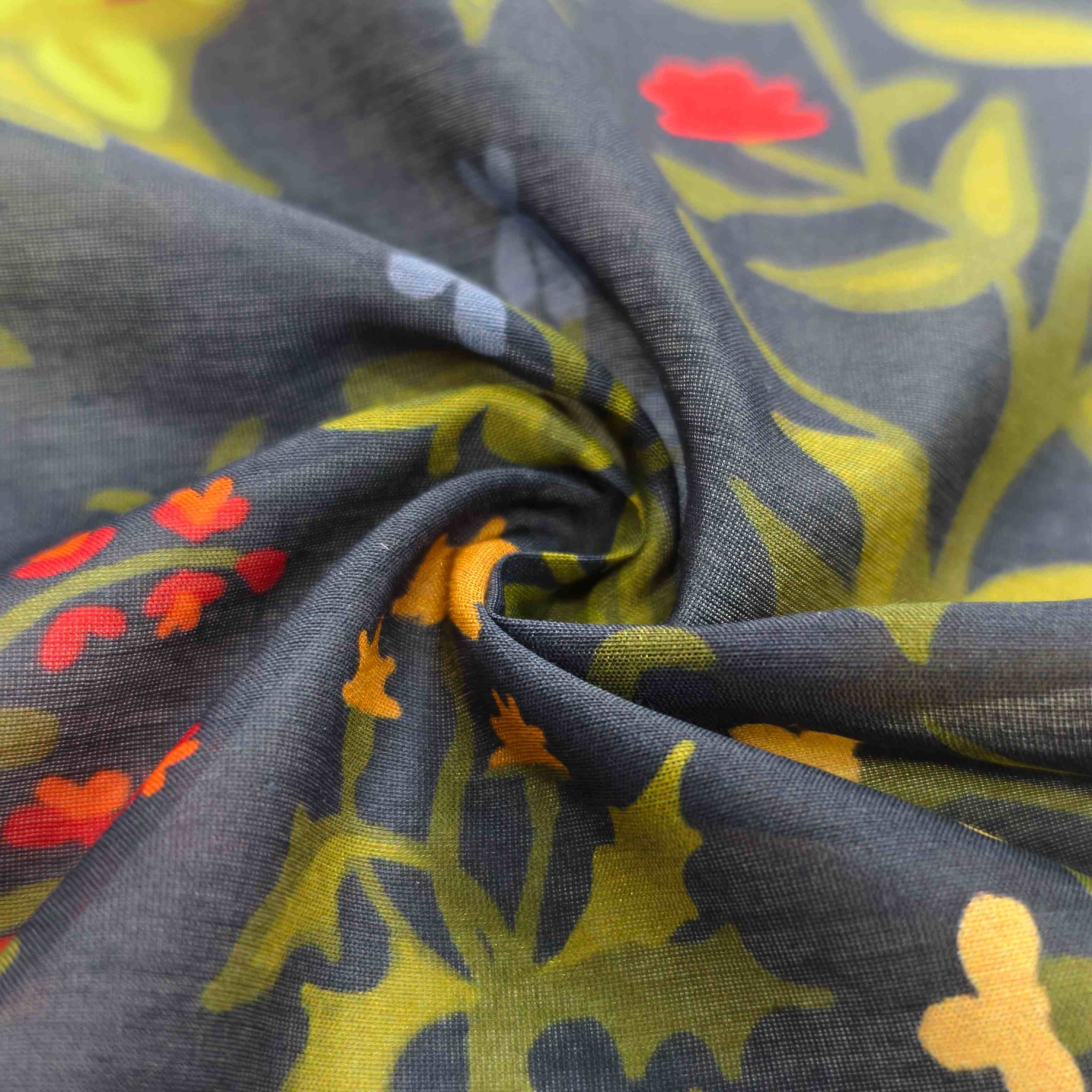
DOCSUN Silk Cotton Blend Fabric
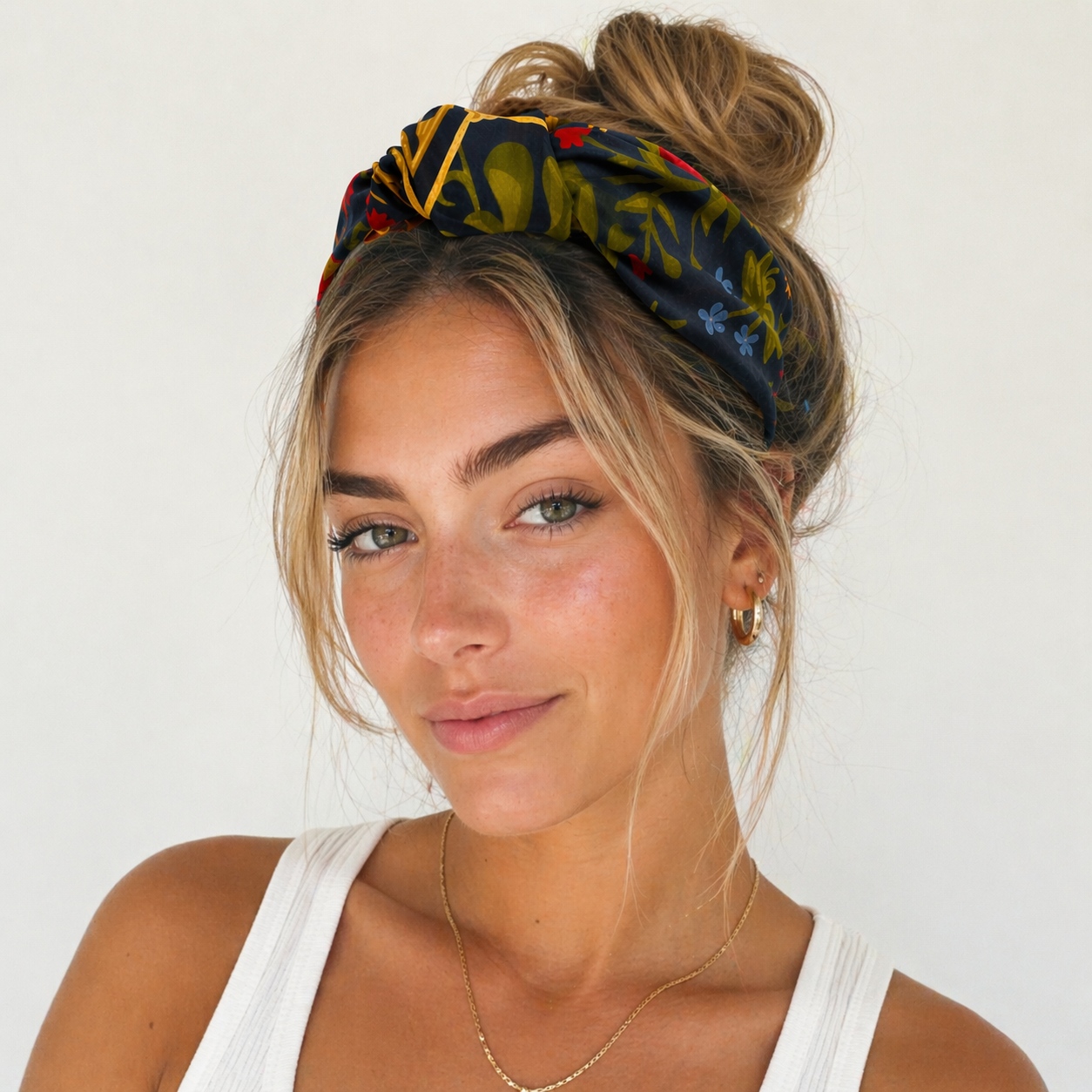 On-head styling example of a Docsun silk-cotton blend knot bandana in dark navy floral pattern
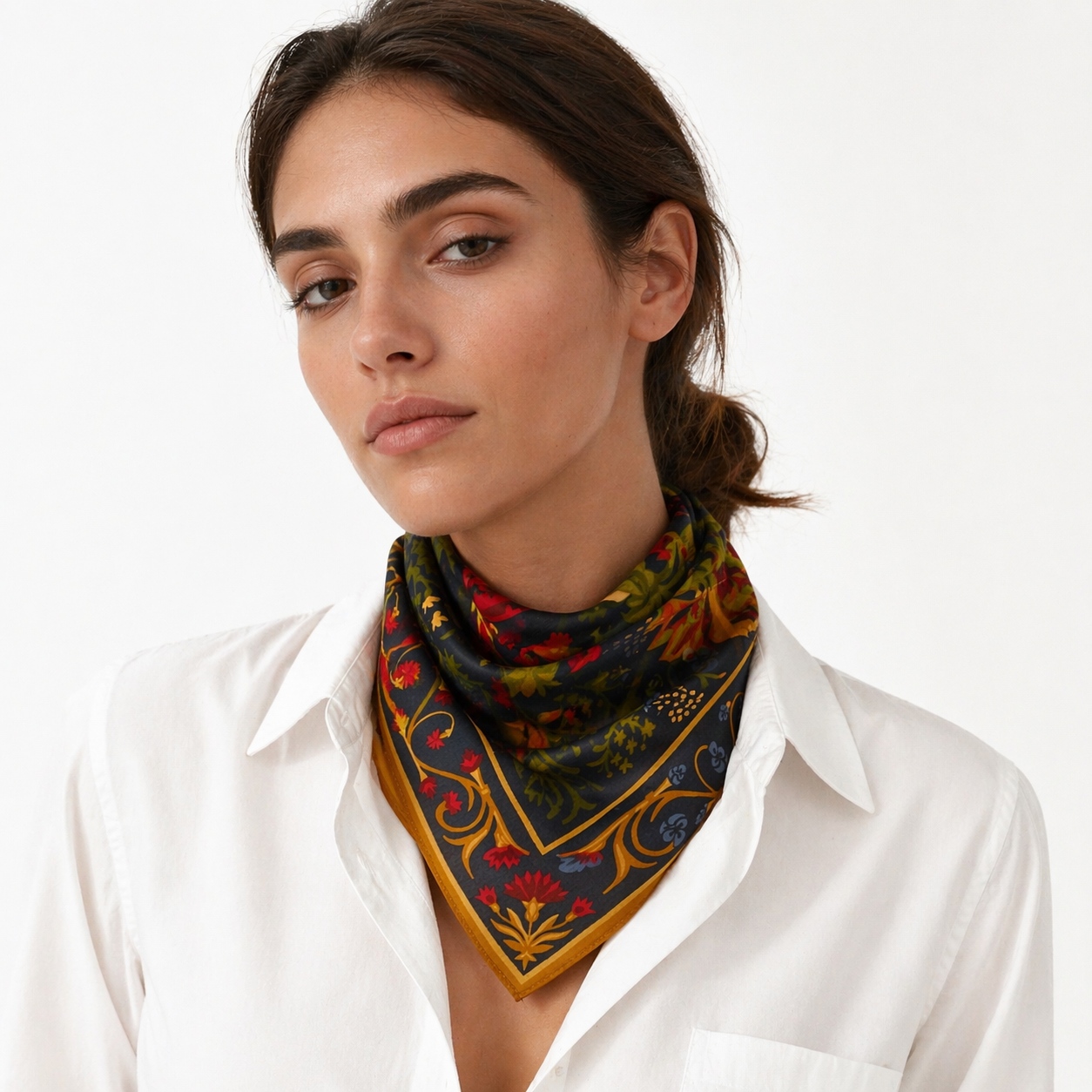 On-neck styling effect of Docsun silk-cotton blend bandana.
Ramie, often known as "China grass," is the ultimate fabric choice for summer outdoor sports, motorcycle riding, or beach vacations.
Physical Properties: This is your best weapon against the heat! It boasts a moisture absorption rate of about 12% and dries 15%-20% faster than standard pure cotton. Ramie's high thermal conductivity provides a natural cooling effect when worn, while maintaining better friction than silk to prevent slipping.
Color Performance: After reactive dyeing, the colors on ramie-cotton appear even more vibrant and lively than on the silk-cotton blend.
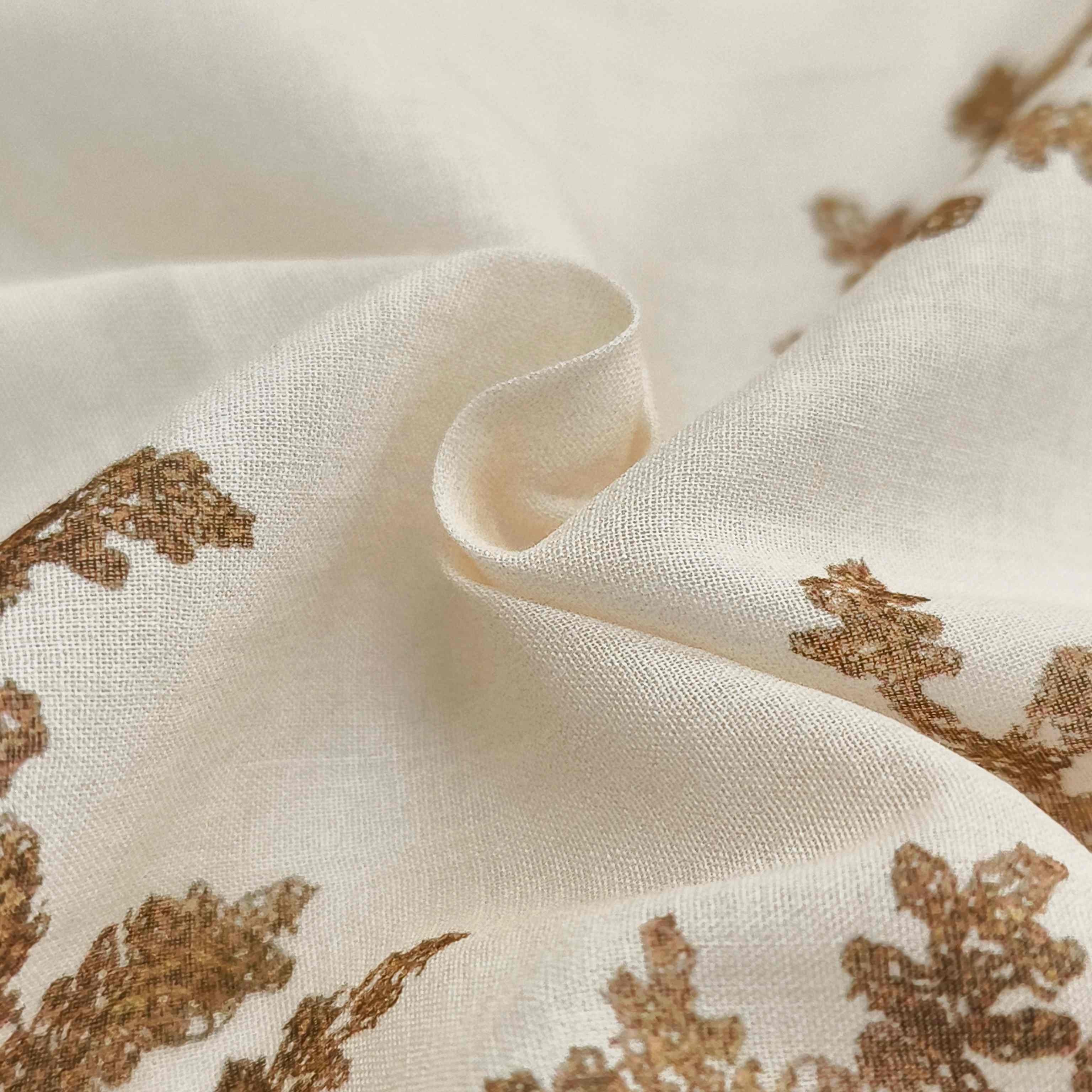 A close-up view of our 55% Ramie & 45% Cotton blend, showcasing the highly breathable and moisture-wicking woven texture.
This is our ultimate answer to "stiff, inferior cotton," perfectly suited for high-frequency daily wear and streetwear styling.
Physical Properties: Instead of the market-standard 30S rough cloth, we utilize expensive 60s*60s high-count combed cotton. The combing process removes short fibers prone to pilling, leaving behind yarns that are incredibly soft with minimal knots. Following thorough desizing and dewaxing treatments, the fabric becomes lightweight, highly breathable, and its moisture absorption far exceeds that of carded cotton, all while offering excellent friction.
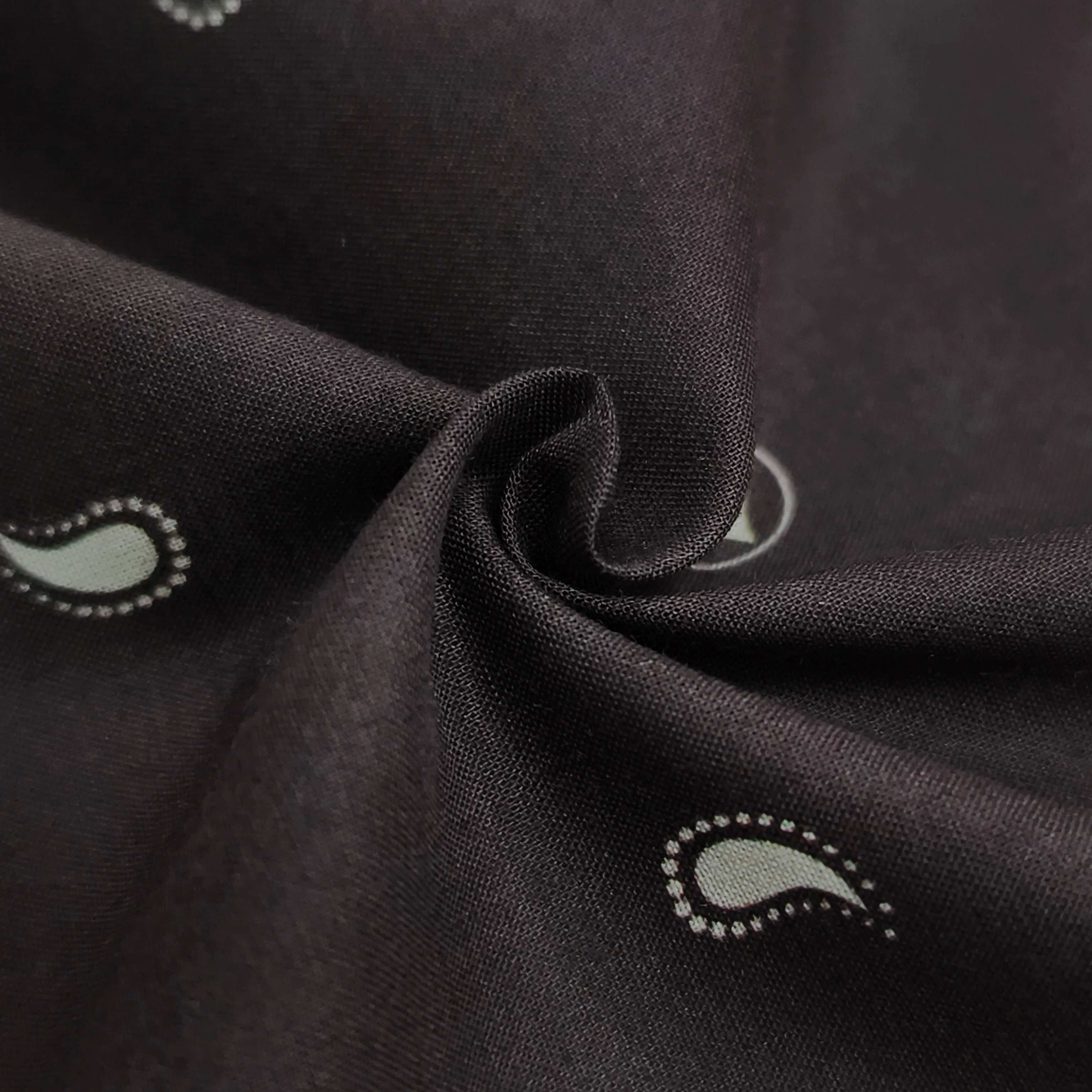 A detailed close-up of our 60s*60s high-count combed cotton, highlighting the tightly woven, impurity-free yarns for ultimate softness.
Beyond the fabric, the printing and hemming processes determine the success of a top-tier bandana.
Reactive Printing: Say Goodbye to Stiffness and Fading
We have completely abandoned inferior pigment printing in favor of eco-friendly reactive dyes. These dyes bond with natural fibers at the molecular level, ensuring vibrant, fade-proof colors without altering the fabric's original soft touch. Learn more about our custom printing expertise.
Digital Printing vs. Screen Printing
Digital Printing: Ideal for small batches, perfectly reproducing complex designs and color gradients. Our technique ensures good reverse-side penetration with elegant colors (the reverse of high-count combed cotton may show a crisp, slight white tint).
Screen Printing: If your design lacks complex gradients and your order exceeds 5,000 pieces, we highly recommend screen printing. The colors are richer and more vibrant than digital printing, offering excellent reverse-side penetration (almost achieving a double-sided color effect), which is crucial for the visual appeal when worn.
Hemming Recommendations
To ensure edge flatness and long-lasting durability, we recommend the Machine Rolled Hem or Dense Overlock techniques, ensuring the edges won't unravel or curl even after multiple washes.
We provide a hassle-free, one-stop service from design to delivery:
Step 1: Choose Your Fabric – Select your ideal base material from silk-cotton, ramie-cotton, or high-count combed cotton. Read our guide to custom fabric, colors and craftsmanship.
Step 2: Confirm Your Design – Send us your original design files or choose from our extensive in-house pattern library.
Step 3: Select Printing Method – We recommend digital printing for small batches and screen printing for orders over 5,000 pieces.
Step 4: Flexible MOQ & Sampling – We offer highly flexible minimum order quantities to support your business. You can request as few as 1 piece for a custom sample. For bulk production, our MOQ is only 50 pieces per design. Sampling typically takes 5-10 days. We strongly advise a swatch test to confirm color accuracy and reverse-side penetration before bulk production.
Step 5: Global Shipping – Once production is complete, we deliver globally via reliable logistics.
💡 Special Note for Global Clients: We have ready-to-ship color cards, fabric swatches, and craftsmanship sample cards stocked locally in the UK, USA, and Australia. If you would like to physically review and feel these samples before starting your custom order, please feel free to contact us!
This is often due to cost-cutting measures by manufacturers. They use low-count yarns (like 30S), apply cheap pigment printing (glue-based inks that clog fiber pores), and skip the essential post-print washing and softening processes, leaving natural cotton wax and sizing agents on the fabric.
Our 55% Ramie & 45% Cotton blend is the ultimate summer choice. Ramie has a moisture absorption rate of about 12% and dries 15%-20% faster than cotton. It also provides high thermal conductivity for a natural cooling effect.
While standard bandanas are 55cm x 55cm, our recommended 65cm oversized bandanas are perfect for individuals with larger head sizes or thick hair. Additionally, their larger surface area allows them to be styled as bandana tops, large pet bandanas, or lightweight shawls.
For small batches or designs with complex color transitions, we recommend eco-friendly reactive digital printing. For larger orders (over 5,000 pieces) featuring designs without complex gradients, screen printing is highly recommended as it provides richer colors and superior reverse-side penetration.